


Quick check – Are you on the right first aid page?
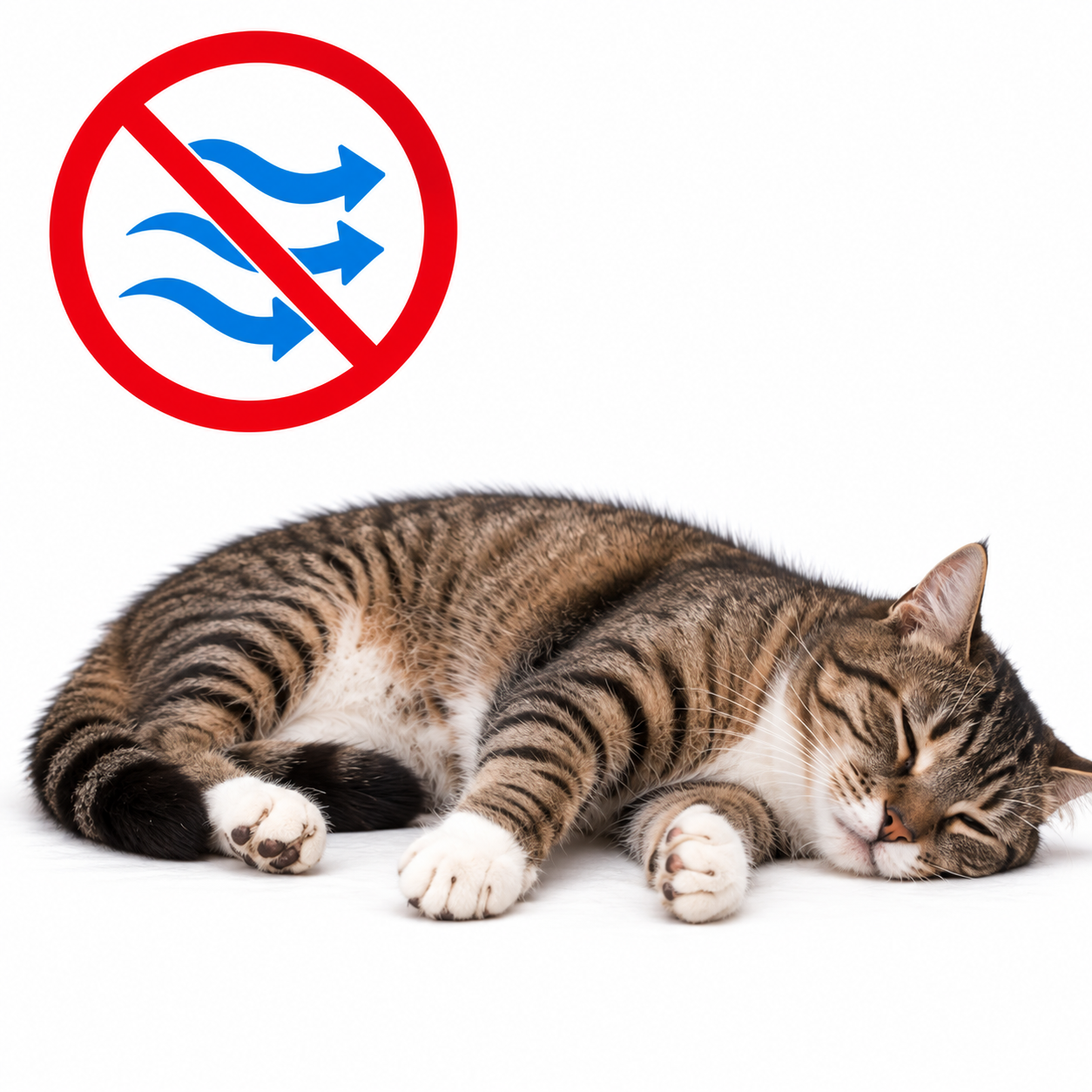
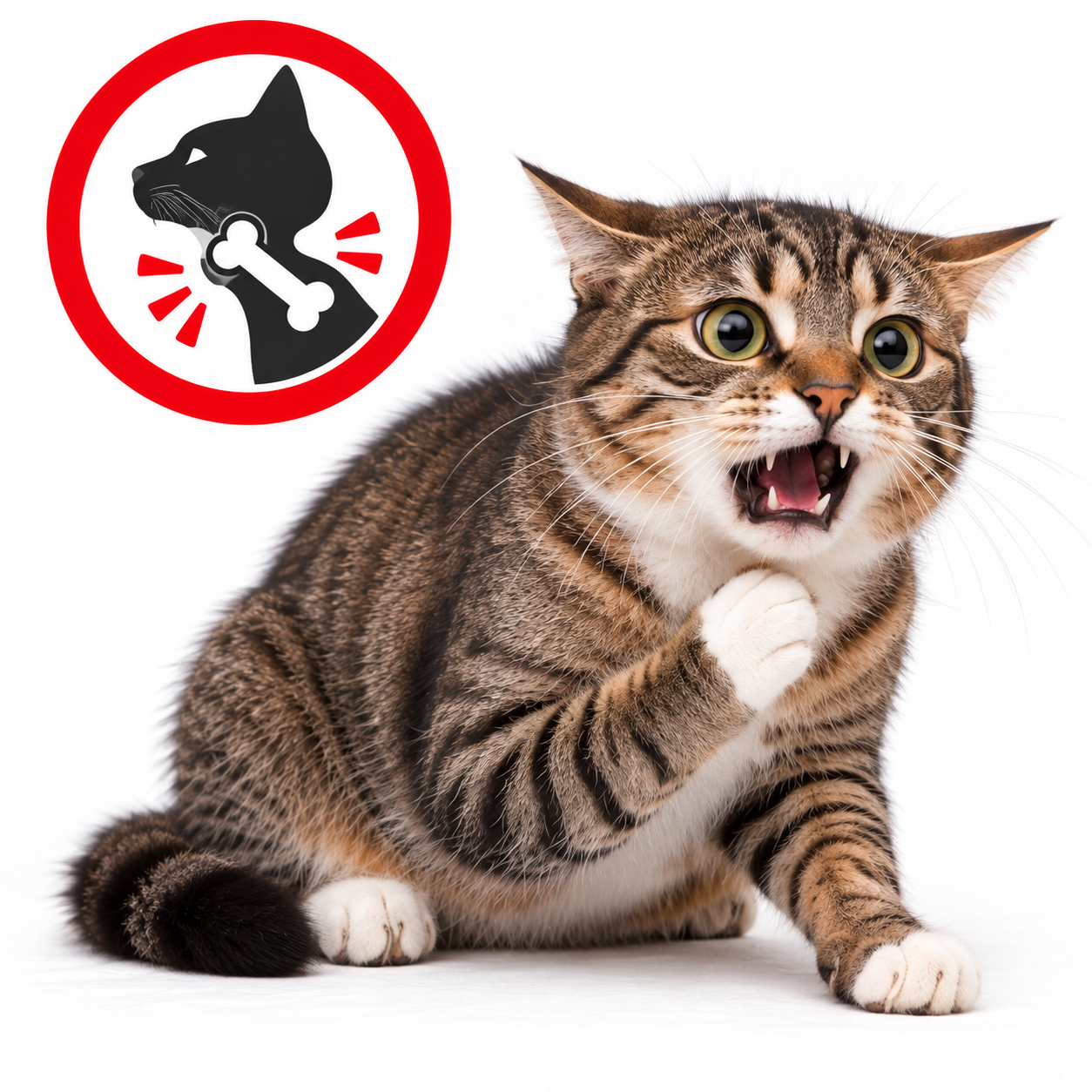
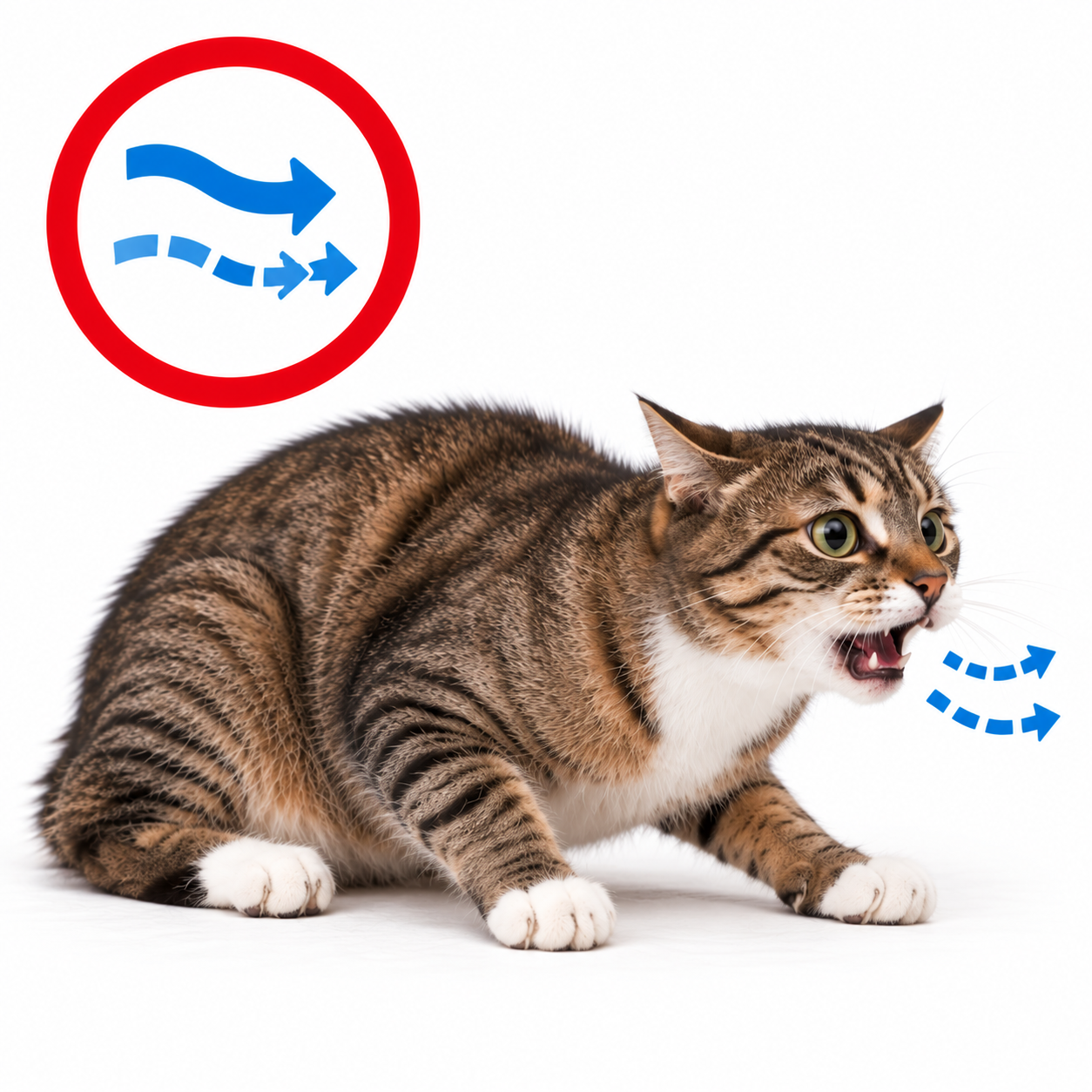
 If someone is with you, ask them to contact a veterinarian while you start the steps below.

DOG CHOKING — FIRST AID
CHECK — CHOKING SIGNS
- Gasping / struggling to breathe
- Pawing at the mouth
- Blue / grey / very pale gums
- Effective cough + moving air → allow coughing
- Cannot breathe normally → ACT NOW
BE AWARE — DO / DO NOT
- Protect yourself; remove any muzzle
- Visible + safely reachable object → remove carefully
- Do not blindly probe the throat
- STRING / LINE / TINSEL → DO NOT PULL
GRAVITY POSITION + BACK BLOWS
- Support securely; head lower if safe
- Give up to 5 firm back blows
- Use force appropriate to your dog's size
- Do not shake your dog
ABDOMINAL THRUSTS
- Still blocked after back blows?
- Up to 5 controlled thrusts
- Inward + upward; pressure appropriate to size
- If not safe → return to back blows
RECHECK / REPEAT
- Check mouth + breathing
- Visible + safely reachable → remove carefully
- Still blocked → repeat 3 + 4
- Unresponsive / not breathing normally → GO TO CPR
CHECK — CHOKING SIGNS
- Gasping / struggling to breathe
- Pawing at the mouth
- Blue / grey / very pale gums
- Effective cough + moving air → allow coughing
- If they cannot dislodge it or cannot breathe normally → start choking First Aid
BE AWARE — DO / DO NOT
- Protect yourself; remove any muzzle
- Visible + safely reachable object → remove carefully
- Do not blindly reach or probe deep into the throat
- STRING / THREAD / TINSEL → DO NOT PULL
- Unsure if it is tissue or an object? Do not pull it
POSITION + BACK BLOWS
- Small dog / puppy: support securely with the head lower than the body, if safe
- Medium / large dog: keep securely supported; lower the head if this can be done safely
- Give up to 5 separate, firm back blows, using force appropriate to size
- Do not shake your dog
- Still blocked → move to Step 4
ABDOMINAL THRUSTS
- Use only if the airway remains blocked after back blows
- Give up to 5 controlled inward + upward thrusts
- Small / fragile dog: use much gentler controlled pressure
- Medium / large dog: position behind the dog; upper abdomen just below the rib cage
- If thrusts cannot be performed safely → return to back blows
RECHECK / REPEAT
- Check mouth + breathing again
- Visible + safely reachable object → remove carefully
- Still blocked → repeat back blows → abdominal thrusts (if appropriate) → recheck
- Repeat while the dog remains conscious and the airway remains blocked
- Unresponsive / not breathing normally → GO TO CPR
SPECIAL SITUATIONS
- STRING / THREAD / TINSEL → DO NOT PULL IT
- Breathing normally: leave it in place, keep calm, restrict activity and arrange veterinary care
- Actively choking: continue the airway-clearing sequence; do not pull on the string
- Long, loose piece + vet help unavailable: if needed to prevent snagging or further swallowing, trim only the loose excess; leave enough clearly visible; never pull or cut it flush
- Watch for vomiting/retching, loss of appetite, weakness, abdominal pain/swelling, abnormal gums or collapse
AIRWAY CLEARED
Follow the STABLE NOW? — POST-EVENT CHECK steps below.
STILL BLOCKED
REPEAT IMMEDIATELY
UP TO 5 BACK BLOWS → UP TO 5 ABDOMINAL THRUSTS (IF APPROPRIATE) → RECHECK
UNRESPONSIVE / NOT BREATHING
GO TO CPR / RESUSCITATION
CHECK BREATHING
Make sure your dog is breathing normally.
MONITOR
Watch responsiveness, gum colour, coughing, retching or breathing difficulty.
STABLE?
Keep calm and quiet.
If your dog becomes unresponsive or stops breathing normally → GO TO CPR.
CONTACT
Contact a veterinarian or remote veterinary service as soon as communication is available.
MONITOR
Watch breathing, responsiveness and overall condition.
If your dog deteriorates → return to the appropriate emergency first-aid steps.
RECORD
Record what happened, important times, changes and first aid given.
PLAN
Plan the safest practical route to veterinary care. Consider transport, distance, communications, conditions and backup options.
CAT CHOKING — FIRST AID
CHECK — CHOKING SIGNS
- Gasping / struggling to breathe
- Loud / abnormal breathing or pawing at the mouth
- Blue / grey / very pale gums or tongue
- Effective cough + breathing → allow coughing
- Cannot breathe normally → ACT NOW
BE AWARE — DO / DO NOT
- Protect yourself; a distressed cat may bite or scratch
- Visible + safely reachable object → remove carefully
- Do not blindly probe the throat
- STRING / THREAD / TINSEL → DO NOT PULL
GRAVITY POSITION + BACK BLOWS
- Support securely; head lower than body if safe
- Give up to 5 sharp back blows
- Strike between the shoulder blades
- Recheck the mouth if the object comes forward
ABDOMINAL THRUSTS
- Still severely / completely blocked after back blows?
- Up to 5 controlled thrusts
- Inward + upward, just below the ribs
- If not safe → return to back blows
RECHECK / REPEAT
- Check mouth + breathing
- Visible + safely reachable → remove carefully
- Still blocked → repeat 3 + 4
- Unresponsive / not breathing normally → GO TO CPR
CHECK — CHOKING SIGNS
- Gasping / struggling to breathe
- Loud / abnormal breathing or pawing at the mouth
- Blue / grey / very pale gums or tongue
- Effective cough + breathing → allow coughing
- If they cannot dislodge it or cannot breathe normally → start choking First Aid
BE AWARE — DO / DO NOT
- Protect yourself — a frightened cat may bite or scratch
- If safe, steady and support your cat and look inside the mouth
- Visible + safely reachable object → remove carefully
- Do not blindly reach or probe deep into the throat
- STRING / THREAD / TINSEL → DO NOT PULL
POSITION + BACK BLOWS
- Support your cat securely with the head lower than the body, if safe
- Support the body so the spine is not twisted
- Give up to 5 sharp back blows between the shoulder blades
- Check the mouth if the object comes forward
- Still blocked → move to Step 4
ABDOMINAL THRUSTS
- Use only for complete / severe choking when back blows have not cleared the airway
- Give up to 5 controlled inward + upward thrusts
- Hold upright against your chest, or place safely on the side
- Place pressure on the upper abdomen just below the ribs
- If thrusts cannot be performed safely → return to back blows
RECHECK / REPEAT
- Check mouth + breathing again
- Visible + safely reachable object → remove carefully
- Still blocked → repeat back blows → abdominal thrusts (if appropriate) → recheck
- Repeat while the cat remains conscious and the airway remains blocked
- Unresponsive / not breathing normally → GO TO CPR
SPECIAL SITUATIONS
- STRING / THREAD / TINSEL → DO NOT PULL IT
- Breathing normally: leave it in place, keep calm, restrict activity and arrange veterinary care
- Actively choking: continue back blows → abdominal thrusts (if appropriate) → check mouth; do not pull the string
- Completely free + clearly loose in mouth only: remove carefully
- Long loose piece + vet help unavailable: trim only loose excess if needed to prevent snagging/further swallowing; never pull or cut flush
AIRWAY CLEARED
Follow the STABLE NOW? — POST-EVENT CHECK steps below.
STILL BLOCKED
REPEAT IMMEDIATELY
UP TO 5 BACK BLOWS → UP TO 5 ABDOMINAL THRUSTS (IF APPROPRIATE) → RECHECK
UNRESPONSIVE / NOT BREATHING
GO TO CPR / RESUSCITATION
CHECK BREATHING
Make sure your cat is breathing normally.
MONITOR
Watch responsiveness, gum colour, coughing, retching, vomiting or breathing difficulty.
STABLE?
Keep calm and quiet.
If your cat becomes unresponsive or stops breathing normally → GO TO CPR.
CONTACT
Contact a veterinarian or remote veterinary service as soon as communication is available.
MONITOR
Watch breathing, responsiveness, gum colour, coughing, retching, vomiting and abdominal pain/swelling.
If your cat deteriorates → return to the appropriate emergency first-aid steps.
RECORD
Record what happened, important times, changes and first aid given.
PLAN
Plan the safest practical route to veterinary care. Consider transport, distance, communications, conditions and backup options.
