

Give readiness enough time to work
Some parts of pet travel readiness can be put in place quickly. Others need time for veterinary processes, documentation, training, testing and your pet’s adaptation.
This timeline helps you understand what may need to start when so important decisions are not compressed into the final weeks before travel.
The stages overlap, and not every stage applies to every journey.

This is a planning guide — not a countdown
📅
1. Know your starting point
Veterinary processes, country requirements, training and changes to the travel environment may need weeks or months.
🏞
Adapt it to your journey
Your timeline depends on your pet, pathway, destination, travel requirements and what is already in place.
⟳
Review as things change
New routes, countries, travel methods or changes in your pet’s needs may add or change readiness work.
Use the timeline as a living readiness plan, not a fixed deadline.
Seven readiness stages
Indicative timing only — stages can overlap.
before travel
& assess
before travel
foundations
before travel
& adapt
before travel
requirements
before travel
readiness check
journey begins
& adjust
throughout travel
readiness

Understand & Assess
Focus: Familiarity, confidence and reliable routines.
6–12 months before travel
● Assess your pet’s health, temperament and adaptability
● Research destination, border or airline requirements that may affect timing
● Begin low-stress exposure to the planned travel environment
View More
● Understand what your chosen travel type realistically involves with a pet
● Introduce basic handling, harness, carrier or crate use
● Observe reactions to movement, noise, confinement and routine changes
● Consider the time and cost involved in getting ready
● Identify likely veterinary access and limitations
● Identify major safety gaps in your boat, vehicle or travel plan
Outcome: You understand whether the planned journey is appropriate and what may require time.
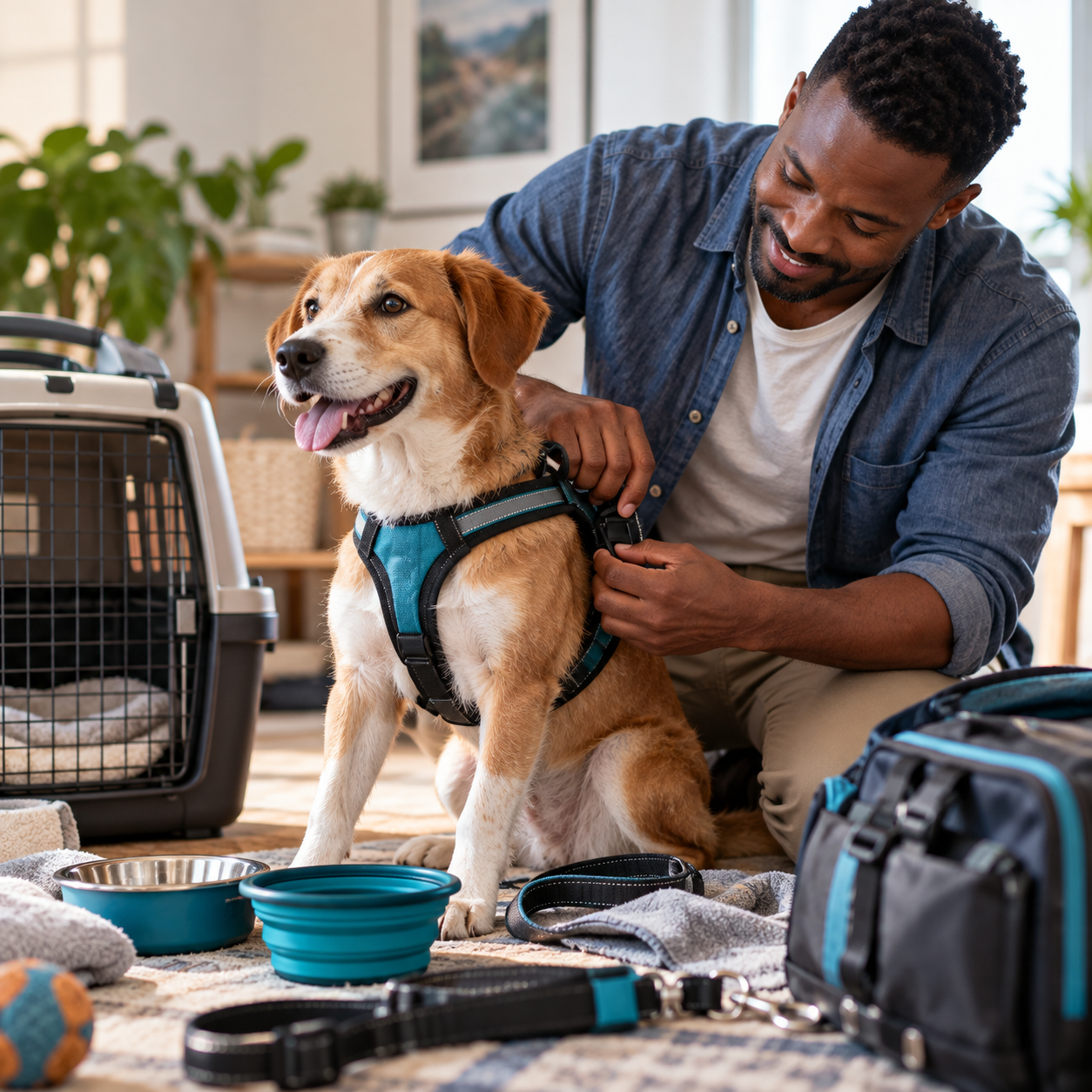
Build the Foundations
Focus: Familiarity, confidence and reliable routines.
3–6 months before travel
● Complete vaccinations, tests, titres or veterinary processes that need advance timing
● Verify microchip details, identification and core pet documents
● Put essential safety and containment systems in place
View More
● Arrange passports, certificates or other pet travel documents where required
● Set up suitable toileting, sleeping and rest areas
● Improve ventilation, shade and temperature management where needed
● Establish containment and recovery arrangements
● Prepare appropriate emergency equipment and supplies
● Adapt carriers, crates, ramps, tenders or other travel equipment where needed
Outcome: The basic health, physical and safety foundations are in place.
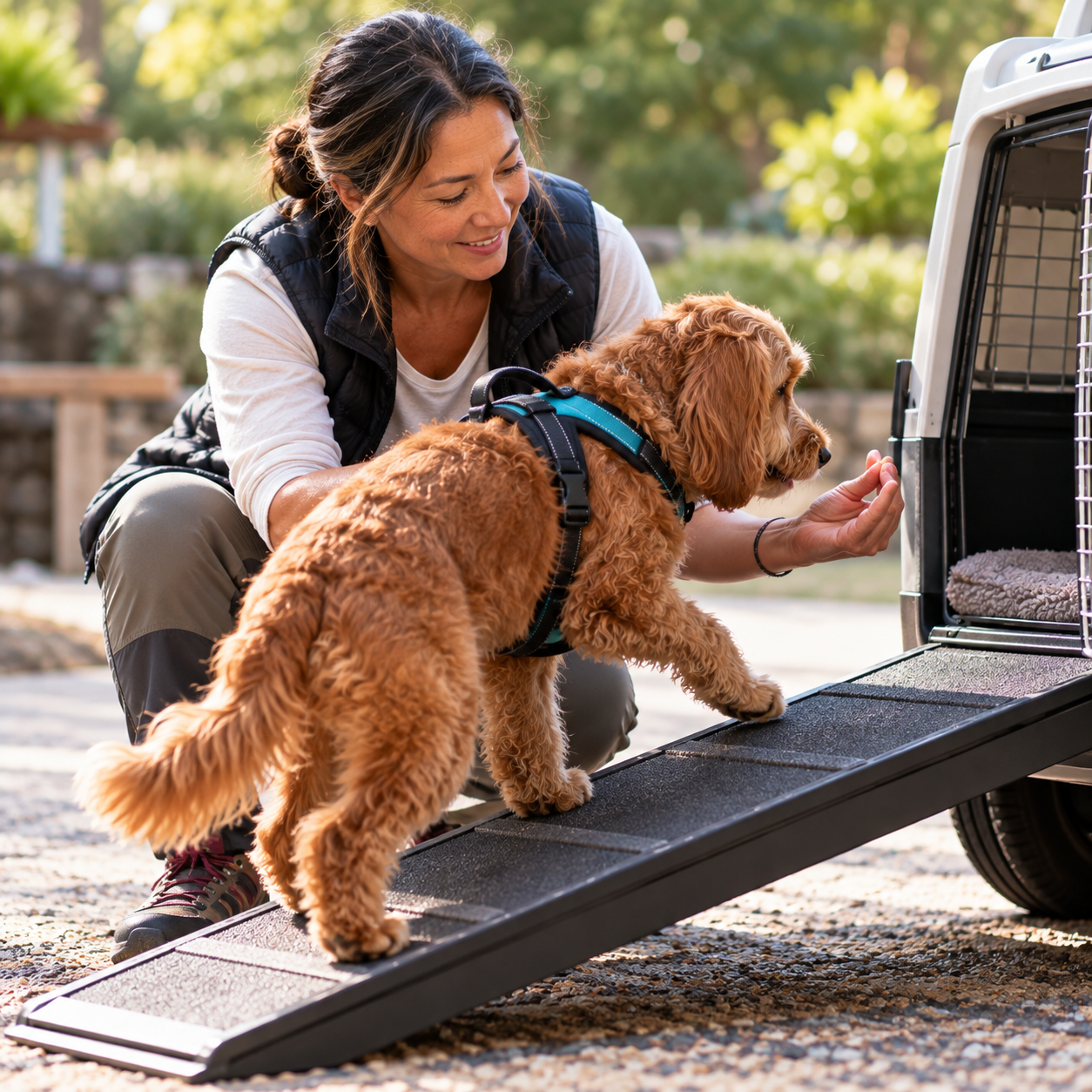
Train, Test & Adapt
Focus: Familiarity, confidence and reliable routines.
2–4 months before travel
● Build familiarity with carriers, restraints, life jackets or other safety equipment
● Practise boarding, transfers, handling and movement in the travel environment
● Begin short, low-pressure test journeys
View More
● Arrange passports, certificates or other pet travel documents where required
● Establish reliable toileting and rest routines
● Practise overnight stays where relevant
● Build familiarity with safe zones and rest areas
● Practise relevant emergency procedures at low intensity
● Gradually introduce noise, vibration, motion and other unfamiliar conditions
● Adapt equipment and routines to your pet’s response
Outcome: Important routines and equipment are familiar before the journey becomes more demanding.

Journey Requirements
Focus: Documentation, route and continuity planning.
1–3 months before travel
● Complete country, border, transit or airline requirements that apply to your journey
● Confirm vaccinations, tests and certificates will remain valid for your travel dates
● Arrange veterinary records, medication and ongoing treatment needs
View More
● Arrange passports, certificates or other pet travel documents where required
● Obtain veterinary letters or medical summaries where needed
● Confirm insurance cover where relevant
● Identify veterinary care along your route and at your destination
● Prepare pet emergency or grab-bag supplies
● Create accessible digital backups of important documents
Outcome: The requirements for this specific journey are understood and being completed.
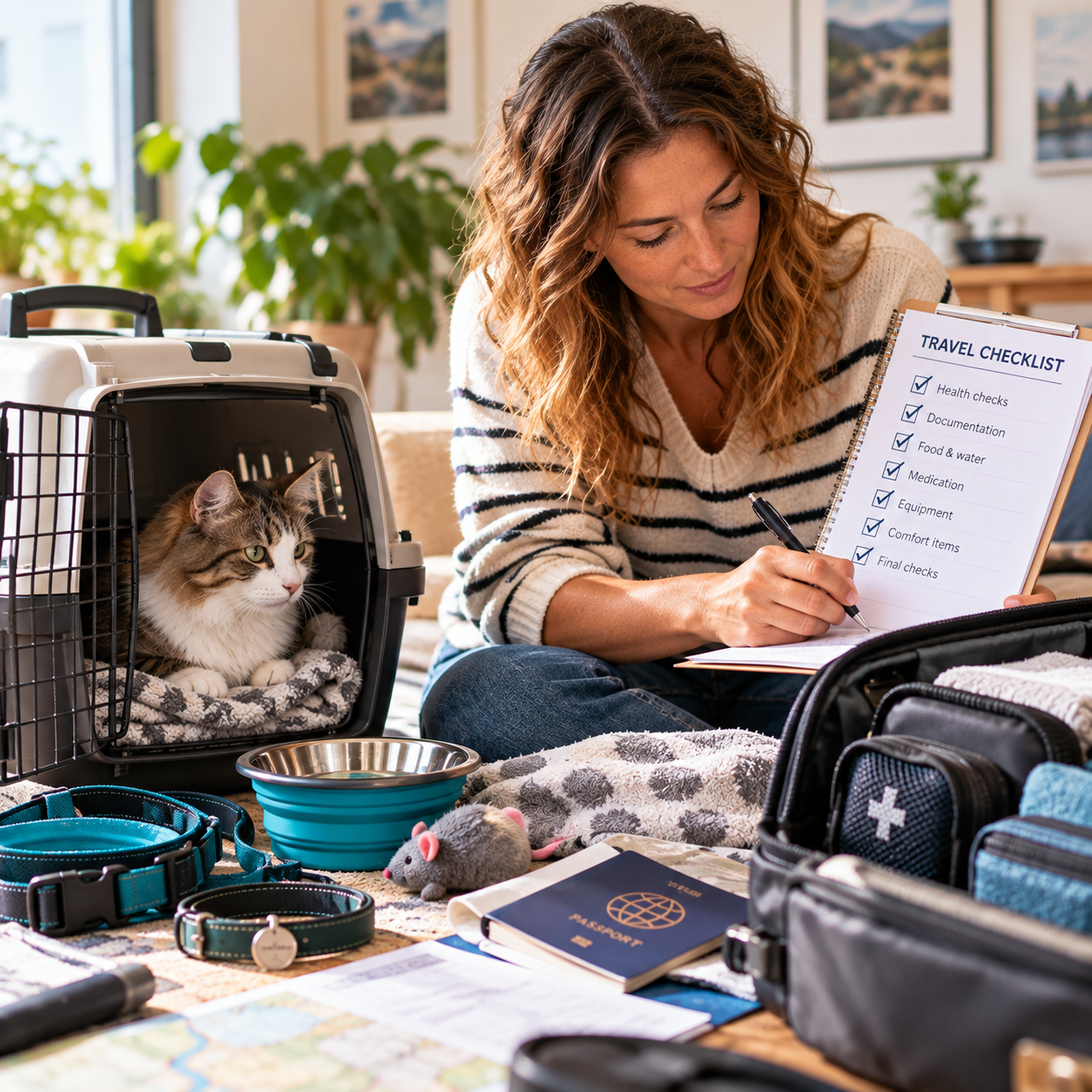
Final Readiness Check
Focus: Sustainable everyday life.
Final weeks before travel
● Confirm documents, bookings and journey requirements are in place
● Test safety, containment and emergency systems
● Check medication, food, water, supplies and essential pet equipment
View More
● Review evacuation and emergency plans
● Rehearse relevant recovery procedures
● Confirm feeding, toileting, sleeping and travel routines
● Complete final grooming and health needs
● Avoid unnecessary last-minute changes to familiar routines
Outcome: You understand whether the planned journey is appropriate and what may require time.
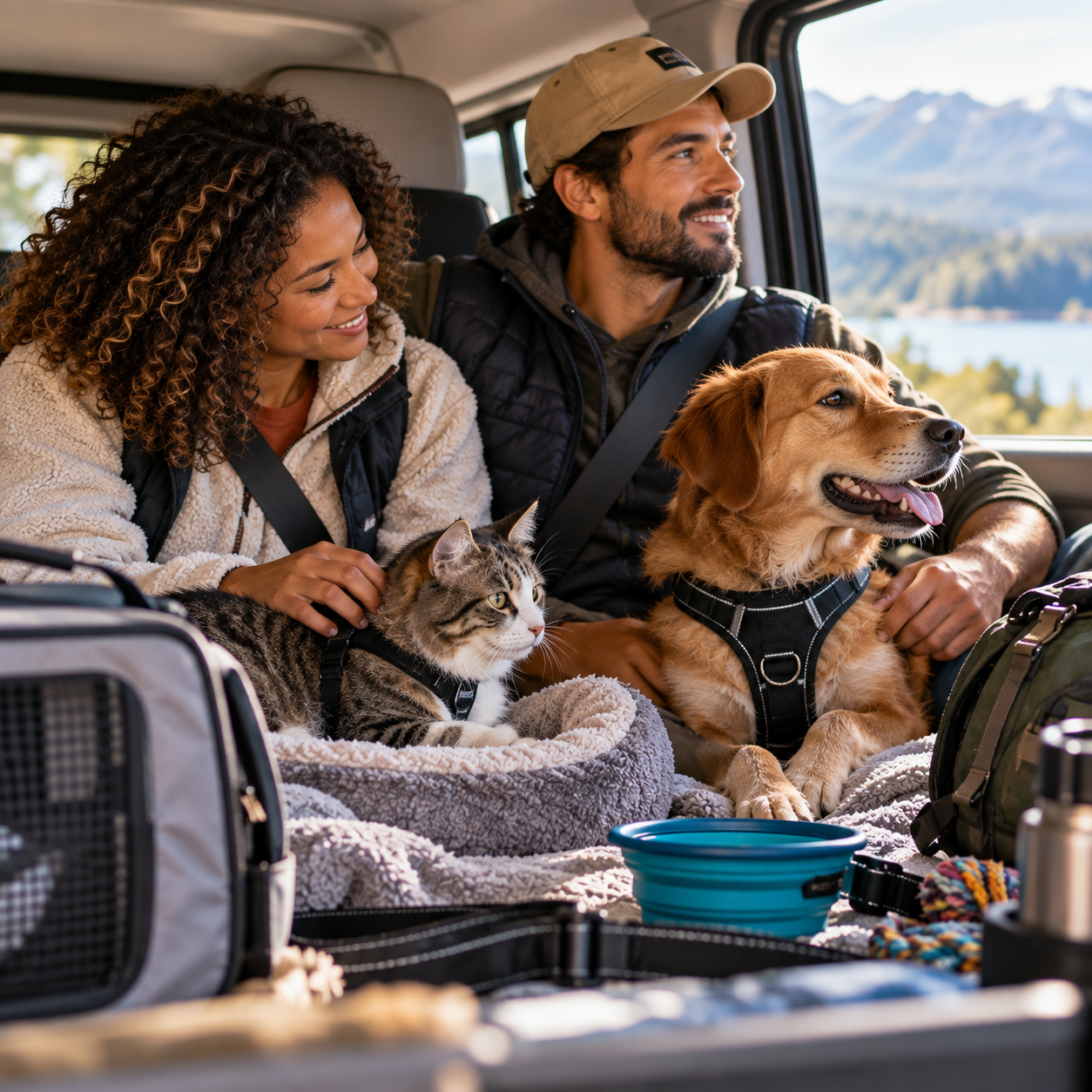
Travel, Observe & Adjust
Focus: Sustainable everyday life.
When the journey begins
● Keep familiar feeding, toileting, rest and other routines where possible
● Monitor stress, comfort, eating, drinking, toileting and recovery
● Adjust the setup or routine in response to your pet
View More
● Treat early travel as a test of your readiness systems
● Start with shorter, repeatable journeys where possible
● Record what works and what needs changing
● Increase distance, duration or demands gradually where appropriate
Outcome: You understand whether the planned journey is appropriate and what may require time.

Maintain Readiness
Focus: Sustainable everyday life.
Throughout ongoing travel
● Review readiness when routes, countries, climates or circumstances change
● Maintain training, familiar routines and your pet’s everyday wellbeing
● Reassess as your pet’s health, age, behaviour or needs change
View More
● Plan for seasonal and climate changes
● Maintain enrichment, exercise and mental stimulation
● Keep veterinary contacts and support options current
● Maintain and replace safety and travel equipment as needed
● Refresh emergency skills and procedures
● Maintain useful community and support connections
Outcome: You understand whether the planned journey is appropriate and what may require time.

The timeline does not end at departure
Good readiness gives you a foundation, not a finished system. As your pet, route, destination, travel environment or circumstances change, review what is still working and adapt what needs to change.
Maintain what works. Review what changes. Adapt when needed.
Turn the timeline into your readiness plan
You now know what may need to happen and when. Continue into the readiness areas to work through what applies to your pet and your journey.
🐾 1. Start with your pet
Identify what is already in place and what needs attention.
☷ 2. Work through the seven readiness areas
Use your pathway to focus on the readiness information relevant to your journey.
🌐 3. Add journey requirements when needed
Check country, border, airline or other travel requirements early enough to allow time for anything that must be completed.
If you’ve selected a pathway, it will come with you. Otherwise, you’ll continue to see all information.
