

Travel Environment Setup Readiness
Training readiness is about whether your pet has learned the skills needed to travel safely.
Good health and good setup are not enough if your pet does not understand what to do in new or changing environments.
This category focuses on the behaviour skills that help pets move safely and cope in vehicles, yachts, campsites, and unfamiliar places.
These skills also support safety during unexpected situations, where pets may need to be handled or controlled quickly.
This includes:
● toilet and hygiene behaviour
● movement and position skills
● settling and rest skills
● motion and noise tolerance
● handling and control acceptance
● safety boundaries and awareness
Training develops gradually. Skills should be reliable in calm conditions before adding movement, noise, or distraction.
Some training skills also support emergency situations where pets may need to be guided, restrained, or moved quickly.
Training & behaviour readiness areas
First Aid Training
Do I have the skills to provide first aid for my pet in an emergency?
Prepare & learn the first-aid skills needed to respond to a pet emergency — wherever you are
First Aid Training readiness
Builds reliable toileting in travel environments.
🌍 All Travel Environments

What must be in place
✅
What can go wrong if not in place
⚠️
What new risks or pressures this may create
ℹ️️
Related systems to check
● tether points & attachment points ● barriers & separation between areas ● safe escape routes
Ready to work on this area?
Find guides, checklists, how-to guidance and pathway-specific advice.
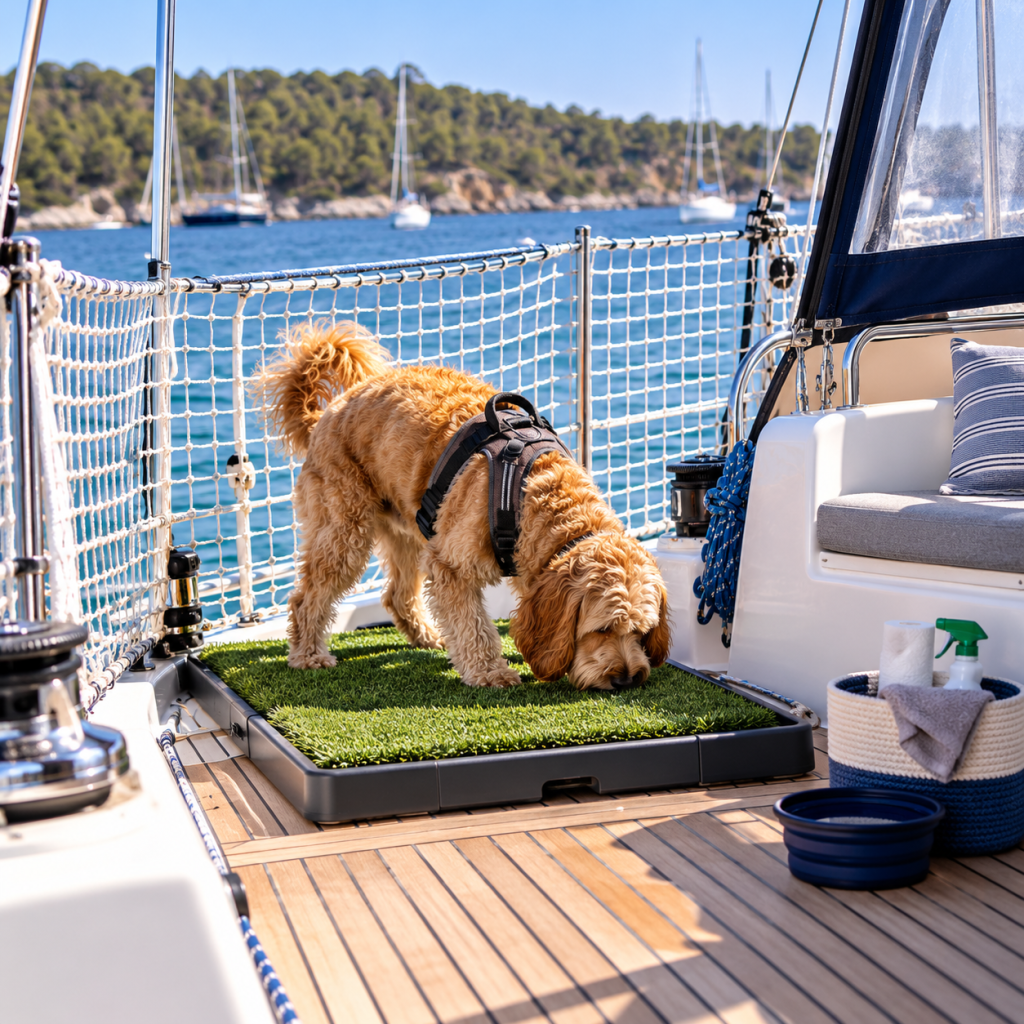
Toilet & hygiene training
Can my pet toilet reliably in the places and conditions we will travel in?
Teaching your pet where and when to toilet in travel environments.
Toilet & hygiene readiness
Builds reliable toileting in travel environments.
🌍 All Travel Environments
What must be in place
✅ A clear toileting cue or routine
✅ Acceptance of the travel toilet surface (grass, mat, turf, litter, ground area)
✅ Ability to toilet on lead where needed
✅ Ability to toilet in new locations
✅ Tolerance for small or slightly moving areas
✅ Predictable holding between opportunities
✅ No panic linked to noise or motion
✅ Routine that works in different places
✅ Toileting without
✅ Ability to toilet despite mild weather changes
What can go wrong if not in place
⚠️ Refusal to toilet causing stress or discomfort
⚠️ Accidents inside living areas
⚠️ Hygiene problems in confined spaces
⚠️ Stress from holding too long
⚠️ Disruption to travel plans
What new pressures training may create
ℹ️️ Routine becoming too rigid
ℹ️️ Surface preference becoming too narrow
ℹ️️ Temporary regression in new environments
Related systems to check
● tether points & attachment points ● barriers & separation between areas ● safe escape routes
Ready to work on this area?
Find guides, checklists, how-to guidance and pathway-specific advice.
Movement & position skills
Can my pet move safely and stay where they should during activity?
Helping your pet move safely and stay in the right places during activity.
Toilet & hygiene readiness
Builds reliable toileting in travel environments. What must be in place
🌍 All Travel Environments
What must be in place
✅
What can go wrong if not in place
⚠️
What new risks or pressures this may create
ℹ️️
Related systems to check
● tether points & attachment points ● barriers & separation between areas ● safe escape routes
Ready to work on this area?
Find guides, checklists, how-to guidance and pathway-specific advice.
Settling & rest skills
Can my pet relax and rest calmly when nothing is happening?
Teaching your pet to switch off and rest during downtime or travel.
card 4 - detail
Builds reliable toileting in travel environments. What must be in place
🌍 All Travel Environments
What must be in place
✅
What can go wrong if not in place
⚠️
What new risks or pressures this may create
ℹ️️
Related systems to check
● tether points & attachment points ● barriers & separation between areas ● safe escape routes
Ready to work on this area?
Find guides, checklists, how-to guidance and pathway-specific advice.
Motion & noise tolerance
Can my pet cope with vibration, motion, and unfamiliar sounds?
Helping your pet stay calm with vibration, movement, and unfamiliar sounds.
card 5 - detail
Builds reliable toileting in travel environments. What must be in place
🌍 All Travel Environments
What must be in place
✅
What can go wrong if not in place
⚠️
What new risks or pressures this may create
ℹ️️
Related systems to check
● tether points & attachment points ● barriers & separation between areas ● safe escape routes
Ready to work on this area?
Find guides, checklists, how-to guidance and pathway-specific advice.
Safety boundaries & awareness
Does my pet avoid hazards and wait when it matters?
Teaching your pet to respect edges, doors, traffic zones, and other hazards.
card 6 - detail
Builds reliable toileting in travel environments. What must be in place
🌍 All Travel Environments
What must be in place
✅
What can go wrong if not in place
⚠️
What new risks or pressures this may create
ℹ️️
Related systems to check
● tether points & attachment points ● barriers & separation between areas ● safe escape routes
Ready to work on this area?
Find guides, checklists, how-to guidance and pathway-specific advice.
Handling, restraint & emergency control
Does my pet to accept lifting, restraint, and close handling.
Preparing your pet to accept lifting, restraint, and close handling.
card 7 - detail
Builds reliable toileting in travel environments. What must be in place
🌍 All Travel Environments
What must be in place
✅
What can go wrong if not in place
⚠️
What new risks or pressures this may create
ℹ️️
Related systems to check
● tether points & attachment points ● barriers & separation between areas ● safe escape routes
Ready to work on this area?
Find guides, checklists, how-to guidance and pathway-specific advice.
Training & behaviour readiness areas
First Aid Training
Do I have the skills to provide first aid for my pet in an emergency?
Prepare & learn the first-aid skills needed to respond to a pet emergency — wherever you are
First Aid Training readiness
Builds reliable toileting in travel environments.
🌍 All Travel Environments
What must be in place
✅
What can go wrong if not in place
⚠️
What new risks or pressures this may create
ℹ️️
Related systems to check
● tether points & attachment points ● barriers & separation between areas ● safe escape routes
Ready to work on this area?
Find guides, checklists, how-to guidance and pathway-specific advice.
Toilet & hygiene training
Can my pet toilet reliably in the places and conditions we will travel in?
Teaching your pet where and when to toilet in travel environments.
Toilet & hygiene readiness
Builds reliable toileting in travel environments.
🌍 All Travel Environments
What must be in place
✅ A clear toileting cue or routine
✅ Acceptance of the travel toilet surface (grass, mat, turf, litter, ground area)
✅ Ability to toilet on lead where needed
✅ Ability to toilet in new locations
✅ Tolerance for small or slightly moving areas
✅ Predictable holding between opportunities
✅ No panic linked to noise or motion
✅ Routine that works in different places
✅ Toileting without
✅ Ability to toilet despite mild weather changes
What can go wrong if not in place
⚠️ Refusal to toilet causing stress or discomfort
⚠️ Accidents inside living areas
⚠️ Hygiene problems in confined spaces
⚠️ Stress from holding too long
⚠️ Disruption to travel plans
What new pressures training may create
ℹ️️ Routine becoming too rigid
ℹ️️ Surface preference becoming too narrow
ℹ️️ Temporary regression in new environments
Related systems to check
● tether points & attachment points ● barriers & separation between areas ● safe escape routes
Ready to work on this area?
Find guides, checklists, how-to guidance and pathway-specific advice.
Movement & position skills
Can my pet move safely and stay where they should during activity?
Helping your pet move safely and stay in the right places during activity.
Toilet & hygiene readiness
Builds reliable toileting in travel environments. What must be in place
🌍 All Travel Environments
What must be in place
✅
What can go wrong if not in place
⚠️
What new risks or pressures this may create
ℹ️️
Related systems to check
● tether points & attachment points ● barriers & separation between areas ● safe escape routes
Ready to work on this area?
Find guides, checklists, how-to guidance and pathway-specific advice.
Settling & rest skills
Can my pet relax and rest calmly when nothing is happening?
Teaching your pet to switch off and rest during downtime or travel.
card 4 - detail
Builds reliable toileting in travel environments. What must be in place
🌍 All Travel Environments
What must be in place
✅
What can go wrong if not in place
⚠️
What new risks or pressures this may create
ℹ️️
Related systems to check
● tether points & attachment points ● barriers & separation between areas ● safe escape routes
Ready to work on this area?
Find guides, checklists, how-to guidance and pathway-specific advice.
Motion & noise tolerance
Can my pet cope with vibration, motion, and unfamiliar sounds?
Helping your pet stay calm with vibration, movement, and unfamiliar sounds.
card 5 - detail
Builds reliable toileting in travel environments. What must be in place
🌍 All Travel Environments
What must be in place
✅
What can go wrong if not in place
⚠️
What new risks or pressures this may create
ℹ️️
Related systems to check
● tether points & attachment points ● barriers & separation between areas ● safe escape routes
Ready to work on this area?
Find guides, checklists, how-to guidance and pathway-specific advice.
Safety boundaries & awareness
Does my pet avoid hazards and wait when it matters?
Teaching your pet to respect edges, doors, traffic zones, and other hazards.
card 6 - detail
Builds reliable toileting in travel environments. What must be in place
🌍 All Travel Environments
What must be in place
✅
What can go wrong if not in place
⚠️
What new risks or pressures this may create
ℹ️️
Related systems to check
● tether points & attachment points ● barriers & separation between areas ● safe escape routes
Ready to work on this area?
Find guides, checklists, how-to guidance and pathway-specific advice.
Handling, restraint & emergency control
Does my pet to accept lifting, restraint, and close handling.
Preparing your pet to accept lifting, restraint, and close handling.
card 7 - detail
Builds reliable toileting in travel environments. What must be in place
🌍 All Travel Environments
What must be in place
✅
What can go wrong if not in place
⚠️
What new risks or pressures this may create
ℹ️️
Related systems to check
● tether points & attachment points ● barriers & separation between areas ● safe escape routes
Ready to work on this area?
Find guides, checklists, how-to guidance and pathway-specific advice.
🏞
Continue your readiness
Start with the areas that matter most to your pet & your journey, then review and build on them as circumstances change.
Yacht & Vehicle Setup Readiness
Travel setup readiness is about the spaces your pet moves through during travel.
It covers safe movement, safe boundaries, and safe access — on boats and in vehicles, including moving between areas.
Risk increases the longer you travel, the more conditions change, and the further help is away.
If movement becomes uncontrolled, you rely on your setup more than quick reactions.
This section focuses on:
● safe movement and footing while travelling
● moving on and off (boarding, exits, transfers)
● preventing escape or falling overboard
● safe routes between areas
● heat, ventilation, and weather exposure
● safe containment during motion or sudden events
Yacht & Vehicle Setup
Travel setup readiness is organised around the main areas where pets move, rest, and transfer during travel.
Each area has different risks depending on height, footing, movement, and access to the outside.
Within each area you will find modules that show:
● what must be in place
● how it should work
● what to check before you rely on it
● how to confirm it is working
This helps you work through one area at a time, while keeping the whole setup aligned.
Deck, Exterior & Cockpit (Sailing)
Is my pet safe in open deck areas near water and edges?
Open outside areas where pets are exposed to water, movement, height changes, and unstable footing.
Below Deck & Companionway (Sailing)
Can my pet move safely inside the boat during motion?
Interior spaces with steps, level changes, confined areas, and shifting balance.
Dinghy Setup (Sailing)
How will my pet stay stable and contained in small craft?
Small, unstable boats where balance, grip, and containment are critical.
Shared Yacht Setup (Sailing)
Are shared safety systems working across the whole boat?
Systems that affect more than one area, such as storage, barriers, tether points, and escape routes.
Vehicle, Trailer & Caravan Exterior (Overland)
Is my pet safe around the outside of the vehicle?
Outside areas including doors, steps, roof tents, trailers, and hitch zones.
Vehicle Interior & Living Areas (Overland)
Is the inside space safe while driving and when parked?
Interior areas where pets travel, rest, and move inside vehicles, caravans, or tents.
Shared Vehicle Setup (Overland)
Are whole-vehicle systems safe and controlled?
Systems that affect the entire vehicle, including heat, electrics, gas, ventilation, and weather protection.
Deck, exterior & cockpit (sailing)
Manage fall risk, injury risk and stability in open areas where pets are close to water and footing changes quickly.
Assess this area from the pet’s physical position, not the human’s.
If balance is lost, safety depends on grip, barriers, and containment — not fast reaction.
Some safety systems affect more than one area of the boat. Review them together where needed.
Deck edge netting & fall protection
Prevents overboard falls and edge exposure.
What must be in place
● lifeline netting continuous bow to stern
● minimal gap at deck level under heel (monohull)
● stern rail netting or solid infill
● transom door closure or net where fitted
● pulpit gap closure without restricting anchor handling
● side boarding gate infill where fitted
● trampoline netting tight weave, claw-resistant (catamaran)
● gap closure between hull and trampoline perimeter (catamaran)
● attachment points recessed or covered
● no horizontal rails usable as climbing ladders
● no exposed deck-edge gaps during heel
● containment possible even where no lifelines or stanchions exist (small boats)
● open transom or walk-through stern areas protected where fitted
Failure Exposure (if absent)
● overboard fall from side deck or foredeck
● slip-through at deck level under heel
● open trampoline perimeter gap (catamaran)
● uncontained stern or gate opening
Trade-offs & Secondary Exposure
● restricted recovery access through netted zones
● obstruction to anchor or mooring handling
● excessive tension loading stanchions
● delayed emergency egress
Related systems to check
● tether points & attachment points
● barriers & separation between areas
● safe escape routes
Deck grip & slip control
Manages slipping and uncontrolled movement on exposed deck surfaces during heel, wet conditions, and wash.
What must be in place
● Non-slip surfaces in walking areas
● Grip effective when wet or salty
● No polished surfaces in movement paths
● Extra grip at edges and steps
● Swim platform high-grip when wet
What can go wrong if not in place
● Slide during heel
● Loss of footing near edge
● Slip from swim platform
What new risks or pressures this may create
● Rough surfaces causing paw wear
● Poorly fitted strips creating trip edges
● Deep texture trapping dirt
Check shared yacht setup
Deck hardware, edges & protrusions
Prevents cuts and snag injuries.
What must be in place
● Rounded or protected cleats at paw height
● Winches shielded where reachable
● Track ends capped
● Turnbuckles covered
● Sharp pins taped or capped
● Flush-mounted fittings where possible
● No exposed bolts in walking paths
● Windlass and chain guarded where reachable
What can go wrong if not in place
● Cuts or puncture wounds
● Snag during slip
● Chain or windlass entanglement
What new risks or pressures this may create
● Shields blocking sail handling
● Covers becoming snag points
● Protection hiding wear or damage
Check shared yacht setup
Rigging, lines & rope management
Reduces entanglement and trip risk from ropes and moving rigging near pets.
What must be in place
● No loose lines in walking paths
● Sheets secured clear of side decks
● Line tails coiled and stored
● No tensioned lines across access routes
● Moving parts positioned above paw height where possible
● Dock lines clear of movement paths
What can go wrong if not in place
● Rope entanglement
● Rope burn
● Trip over loose lines
● Boom strike
What new risks or pressures this may create
● Over-securing affecting sail control
● Line bundles creating obstacles
● Changes in load behaviour
Check shared yacht setup
Cockpit safety
Prevents falls and pinch injuries
What must be in place
● Non-slip cockpit floor
● Rounded seating edges
● Locker lids restrained
● Lids not opening into walking paths
● Tables secured
● Drain openings paw-safe
● Safe transition between cockpit and side decks
● Stairs or ladders controlled where pets can access
What can go wrong if not in place
● Fall into locker
● Pinch injury
● Uncontrolled movement toward helm
● Fall from raised platform
What new risks or pressures this may create
● Barriers slowing crew movement
● Drain covers affecting water flow
● Partitions narrowing space
Check shared yacht setup
Stern, transom & swim platform safety
Prevents aft falls and propulsion exposure.
What must be in place
● Edge protection when underway
● High-grip swim platform
● No pinch points in moving platforms
● Transom doors secured
● Ladder isolated when not in use
● Exhaust outlets shielded
What can go wrong if not in place
● Fall overboard at stern
● Pinch injury
● Propeller contact
What new risks or pressures this may create
● Barriers blocking rescue
● Ladder isolation slowing recovery
● Moving parts creating pinch zones
Check shared yacht setup
Deck steps & ladders
Prevents falls at level changes.
What must be in place
● Non-slip steps
● No open side gaps at pet height
● Ladders secured when not in use
● Stable transitions between areas
What can go wrong if not in place
● Fall down steps
● Slip through open side gap
● Fall from raised position
What new risks or pressures this may create
● Gates slowing movement
● Added rails narrowing access
● Locks slowing emergency movement
Check shared yacht setup
Yacht boarding & water access points
Ensures safe entry, exit, and recovery from water.
What must be in place
● Defined boarding location
● Stable ladder reachable from water
● Non-slip ladder rungs
● No open gaps at platform edge
● Boarding area clear of loose gear
● Safe route into cockpit
● No need to step near propeller zone
What can go wrong if not in place
● Slip into water
● Unable to climb out
● Fall between dinghy and yacht
● Panic from unstable surface
What new risks or pressures this may create
● Barriers slowing rescue
● Over-tight securing stressing fittings
● Moving platforms creating pinch points
Check shared yacht setup
● storage & loose gear control
● barriers & separation between areas
● safe escape routes
Deck stowage & trip control
Prevents trip hazards and shifting equipment.
What must be in place
● No loose gear in walking zones
● Fenders secured
● Tools and buckets stowed
● Winch handles stored
● No items able to roll under heel
What can go wrong if not in place
● Trip or fall
● Impact from shifting gear
● Blocked recovery space
What new risks or pressures this may create
● Over-securing slowing access
● Extra hardware narrowing space
● Temporary storage failing under load
Check shared yacht setup – none
Below deck & companionway (sailing)
Interior spaces include steps, level changes, confined areas, and moving surfaces.
Most problems happen when movement between levels is not controlled.
Some safety systems affect more than one area of the yacht. Review them together where needed.
Companionway safety
Controls movement between cockpit and cabin levels.
What must be in place
● Physical barrier at the top of the companionway (gate or net)
● Non-slip stair treads
● Side protection along steps
● Hatch slides shielded
● Hatch operable with one hand
● No panels that can fall freely
What can go wrong if not in place
● Fall into cabin during heel or sudden movement
● Head or limb injury on descent
● Uncontrolled access between deck and cabin
What new risks or pressures this may create
● Barrier slowing emergency movement
● Added structure narrowing stair space
Check shared yacht setup
Cabin floors, steps & hot surfaces
Prevents slips, trips, falls, and burns inside the cabin
What must be in place
● Clear movement paths
● No sudden unprotected drops in level
● Floor panels secure and flush
● No loose mats in walking areas
● Stable bracing points during motion
● Hot galley surfaces shielded
● Cooking equipment secured when not in use
● No exposed hot metal at paw height
What can go wrong if not in place
● Slip during heel or sudden movement
● Trip over uneven flooring
● Burns from hot surfaces or liquids
● Fall due to unstable panels
What new risks or pressures this may create
● Ramps reducing clearance
● Shielding reducing airflow
● Restraints slowing human access
Check shared yacht setup
Openings, vents & escape control
Prevents escape and entrapment through openings.
What must be in place
● Portlights secured or screened
● Deck hatches safe when open
● Vent openings screened
● Hatch restrictors fitted where needed
● No sharp edges on frames
● No access to rotating fans
● Insect screens secure
What can go wrong if not in place
● Escape through unsecured opening
● Paw trapped in hatch or vent
● Injury from fan blades
● Fall through open hatch
What new risks or pressures this may create
● Screening reducing airflow
● Restrictors limiting ventilation
● Extra hardware narrowing openings
Check shared yacht setup
Interior doors, panels & pinch-point control
Prevents crush and swing injuries.
What must be in place
● Sliding doors fitted with end stops
● Hinged panels restrained
● No pinch points at paw height
● No loose panels under motion
● Hardware secure and rounded
● Doors positively latched
What can go wrong if not in place
● Paw crush injury
● Impact from swinging door
● Access to unsafe areas
What new risks or pressures this may create
● Extra hardware reducing space
● Latches restricting airflow
● Restraints slowing movement
Check shared yacht setup
Restricted compartments: engine, electrics, bilge & chemicals
Prevents burns, contamination, and entrapment.
What must be in place
● Engine spaces not accessible to pets
● Hot engine parts shielded
● Batteries enclosed and secured
● Electrical systems protected
● Bilge openings covered
● No small cavities pets can enter
● Cleaning chemicals stored securely
● Fuel and oils isolated
● Access panels secured
What can go wrong if not in place
● Burns from hot engine parts
● Electrical injury
● Chemical exposure
● Entrapment in confined spaces
● Contact with contaminated bilge water
What new risks or pressures this may create
● Restricted access for maintenance
● Covers trapping heat or moisture
● Extra hardware reducing ventilation
Check shared yacht setup
● fire, gas & electrical exposure
● barriers & separation between areas
Interior resting & sleeping safety
Prevents falls from bunks and resting areas during motion.
What must be in place
● Bunk netting or lee cloths full length
● Netting tight enough for heel
● No gaps at head or foot
● Attachment points rounded
● Netting not blocking exit route
● Resting areas stable during motion
What can go wrong if not in place
● Fall from bunk during heel
● Entrapment in loose netting
● Blocked exit during emergency
What new risks or pressures this may create
● Netting slowing emergency movement
● Over-tight tension stressing fittings
● Hardware creating snag points
Check shared yacht setup
Dinghy setup (sailing)
Controls stability and fall risk on small craft where balance is limited and movement is unpredictable.
Dinghies move independently from the yacht and have less stability.
Loss of balance or containment quickly leads to water exposure.
Related systems apply across more than one area. Where they are mentioned in a card or module, they should be reviewed as part of that work; they are shown separately only to avoid duplication.
Dinghy stability & surface safety
Manages footing, balance, heat exposure, and wet conditions inside the dinghy where stability is limited.
What must be in place
● Dinghy large enough for safe balance
● Floor firm and not flexing under load
● Non-slip floor surface when wet
● No hard raised edges at floor level
● Drain plugs secured
● Load balanced for people and pets
● Tubes protected where claws may contact
● Metal fittings protected from heat
● Stable standing area for pets
● No loose towels or covers on floor
● Floor stable when weight shifts
What can go wrong if not in place
● Dinghy tipping from weight shift
● Slip over tube edge
● Panic from unstable floor
● Water entering through open drain
● Burns from hot metal
● Tube damage from claws
● Loss of footing in wet conditions
What new risks or pressures this may create
● Covers creating trip hazards
● Covers catching wind at speed
● Moisture trapped under covers
● Extra flooring reducing internal space
Check shared yacht setup
Dinghy layout, stowage & engine separation
Prevents loose gear movement and engine contact.
What must be in place
● fixed seating only
● seats securely mounted
● no loose boards or storage boxes
● fuel tank restrained and isolated
● battery enclosed and secured where fitted
● no loose gear on floor during operation
● separation from propeller area
● no access to propeller when tilted
● controls shielded where reachable by pets
● fuel lines protected and
What must be in place
● Fixed seating only
● Seats securely mounted
● No loose boards or boxes
● Fuel tank secured and isolated
● Battery enclosed where fitted
● No loose gear on floor during use
● Clear separation from propeller area
● No access to propeller when tilted
● Controls shielded from pet contact
● Fuel lines protected
● No sharp fittings in pet standing areas
What can go wrong if not in place
● Gear striking pet in waves
● Fuel spill or battery movement
● Contact with propeller
● Loss of balance from shifting load
● Injury from exposed hardware
What new risks or pressures this may create
● Over-stowage reducing balance space
● Shielding limiting engine access
● Added structures reducing space
Check shared yacht setup
Dinghy boarding point
Controls safe entry and exit.
What must be in place
● One clearly defined boarding location
● Reinforced tube or hull at boarding point
● Non-slip surface where pets step
● Boarding area clear of gear
● No boarding over engine or propeller area
● Stable footing during entry
● Structure positioned away from boarding path
● No sharp edges at entry point
What can go wrong if not in place
● Slip into water during boarding
● Dinghy rolling during entry
● Fall onto engine or fittings
● Hesitation causing unstable movement
● Injury from sharp edges
What new risks or pressures this may create
● Reinforcement creating harder contact surface
● Fixed boarding point limiting flexibility
● Added structure reducing usable space
Check shared yacht setup
Dinghy secured, suspended & stored
Manages access, entrapment, and movement risks when the dinghy is hoisted, stored, or towed.
What must be in place
● No pet access when dinghy is lifted or on davits
● No gap between stern and suspended dinghy
● Swing area clear during lifting
● Hoist zones controlled during operation
● No access beneath stored dinghy
● Covers secured without creating trapped spaces
● No access to tow lines
● Dinghy secured against movement under heel
● Tow lines routed away from pet areas
● No reachable pinch points during lifting or lowering
What can go wrong if not in place
● Fall between yacht and suspended dinghy
● Entrapment under stored dinghy
● Impact during hoisting
● Line entanglement
● Overheating under covers
● Fall near tow zone
What new risks or pressures this may create
● Securing lines creating trip hazards
● Barriers limiting crew access
● Covers trapping moisture
● Lashings narrowing movement space
Check shared yacht setup – none
Shared Yacht Setup (Sailing)
These systems affect the whole yacht, not just one area.
They are physical controls that influence multiple spaces at once.
If one shared system fails, problems often appear elsewhere.
This section covers setup only — not training or behaviour.
Storage & loose gear control
Prevents injury from moving gear and falling items.
What must be in place
● Lockers securely latched
● Lids restrained so they cannot drop
● No gravity-only locker lids
● Heavy gear secured low
● No loose gear in pet walk paths
● Nothing able to shift during heel
● Deck lockers secured where pets pass
● Hanging items restrained from swinging
What can go wrong if not in place
● Gear striking pets
● Lids falling onto paws
● Trips and falls
● Escape routes blocked
What new risks or pressures this may create
● Extra latches slowing access
● Hardware creating snag points
● Overpacked storage hiding faults
Tether points & attachment points
Provides safe restraint points when needed.
What must be in place
● Purpose-built attachment points only
● Fittings flush or rounded
● Positioned so load cannot pull pet toward edge
● Attachment points available in main pet areas
● No rails, cleats, or furniture used as anchors
● Fittings strong enough for expected load
What can go wrong if not in place
● Uncontrolled movement
● Fall toward edge while restrained
● Fitting failure under load
What new risks or pressures this may create
● Trip hazards
● Incorrect angles increasing strain
● Fittings intruding into walk paths
Barriers & separation between areas
Controls access between safer and higher-risk zones.
What must be in place
● ability to separate interior and deck
● ability to separate cockpit
What must be in place
● Interior and deck can be separated
● Cockpit and side decks can be separated
● Rest areas can be isolated
● Barriers remain secure under heel
● No single point of failure
● Barriers do not block escape routes
What can go wrong if not in place
● Access to unsafe areas
● Exposure during manoeuvres
● Entrapment during emergency
What new risks or pressures this may create
● Barriers limiting crew movement
● Latch or hinge failure
● Reduced airflow
Safe escape routes
Ensures clear paths during emergency.
What must be in place
● Continuous walk paths from all areas
● No dead-end spaces
● Hatches reachable and usable
● Dinghy and liferaft exits clear
● No gear blocking exits
● Exits operable without tools
● Routes usable under heel
What can go wrong if not in place
● Entrapment
● Blocked exit
● Delayed evacuation
What new risks or pressures this may create
● Escape paths reducing storage space
● Larger openings affecting layout
Toilet area & drainage setup
Prevents contamination and slip hazards.
What must be in place
● Defined toilet area where used
● Non-absorbent surface
● Drainage away from walk paths
● Washdown possible without hoses across routes
● Sealed waste storage
● No standing water in pet areas
● Drains safe for paws
What can go wrong if not in place
● Slipping
● Odour build-up
● Damp surfaces
● Paw injury in drains
What new risks or pressures this may create
● Covered drains reducing flow
● Sealed flooring trapping moisture
● Reduced ventilation
Hot, rough & sharp surfaces
Prevents injury from rough, sharp or hot materials.
What must be in place
● No abrasive surfaces at paw height
● Netting safe for claws
● Hot metal covered or shielded
● No sharp edges in pet areas
● Dark surfaces checked for heat
● Chew-risk materials protected
What can go wrong if not in place
● Paw injury
● Claw entrapment
● Burns
● Damage to fittings
What new risks or pressures this may create
● Soft covers reducing grip
● Covers hiding corrosion
● Protective edging creating trip points
Ventilation without escape gaps
Manages airflow and temperature control while preventing pets from exiting through openings.
What must be in place
● Ventilation that does not create exit gaps
● Secure screening
● Hatch openings limited where needed
● Airflow maintained in enclosed spaces
● Screening cannot be pushed out
● Ventilation available when pets remain onboard
What can go wrong if not in place
● Overheating
● Escape through openings
● Poor air quality
What new risks or pressures this may create
● Screening reducing airflow
● Restrictors limiting ventilation
● Hardware narrowing openings
Fire, gas & electrical exposure (pet height)
Prevents burn and electrical injury at pet height.
What must be in place
● Heaters shielded
● Cooking equipment shielded
● Gas systems sealed from living areas
● Electrical cables protected
● Batteries secured and ventilated
● No exposed hot or live parts at pet height
● Exhaust positioned away from rest areas
What can go wrong if not in place
● Burns
● Electrical injury
● Gas exposure
● Fire risk
What new risks or pressures this may create
● Shielding reducing airflow
● Covers trapping heat
● Protection limiting maintenance access
Vibration & loose fittings control
Prevents instability, shifting panels, and impact risk caused by vibration and unsecured fittings.
What must be in place
● Internal panels secured firmly
● Locker doors not rattling under motion
● Engine covers properly seated and latched
● Floor panels stable under load
● Companionway boards stable and seated
● Mounted equipment fixed securely
● No metal-on-metal contact at pet height
● Hinges and catches tight and aligned
● No trim pieces lifting at edges
● Bulkhead fittings secure
● No unsecured decorative or loose interior fittings
What can go wrong if not in place
● Panels shifting during heel
● Sudden movement causing slips
● Falling trim striking pets
● Engine cover lifting under load
● Sharp edges forming as fittings loosen
● Progressive structural loosening over time
● Increased noise masking more serious faults
What new risks or pressures this may create
● Over-tightening stressing materials
● Added fixings creating snag points
● Sealants trapping moisture
● Noise dampening materials reducing airflow
● Extra fasteners reducing access for maintenance
Wear & tear monitoring
Manages gradual failure of safety systems due to age or use.
What must be in place
● Marine-grade materials used
● Nets checked for stretch
● Latches working reliably
● Non-slip surfaces still effective
● No single point of containment failure
What can go wrong if not in place
● Containment failure
● Latch failure
● Reduced traction
What new risks or pressures this may create
● Over-tight systems failing suddenly
● Coatings hiding corrosion
● Added hardware increasing complexity
Vehicle, trailer & caravan exterior (overland)
Controls safety outside the vehicle where pets are exposed to traffic, ground hazards, moving parts, and height changes.
Exterior areas include doors, steps, roof structures, trailers, hitch zones, and underbody spaces.
Risk increases when access points are open, footing is unstable, or moving parts create gaps or crush zones.
Some safety depends on systems that apply across multiple vehicle areas. Review those where relevant.
Doors, hatches & perimeter
Manages escape and injury risk at exterior openings.
What must be in place
● Doors close securely without gaps
● Sliding doors cannot trap paws
● Rear doors or tailgates controlled when open
● Pets cannot push doors open from inside
● Caravan or trailer doors equally secure
● No exposed sharp edges at entry points
● Child locks or equivalent fitted where needed
What can go wrong if not in place
● Pet escaping into traffic or unfamiliar area
● Paw crush during door closure
● Sudden uncontrolled exit
What new risks or pressures this may create
● Extra barriers slowing human access
● Added latches creating snag points
● Door modifications affecting seals
Check shared vehicle setup
Steps, ladders & access height
Prevents falls when entering or leaving elevated vehicles.
What must be in place
● Steps stable and non-slip
● Ladders secured when not in use
● No large unsupported jumps required
● Edges protected where height differences exist
● Caravan or trailer steps equally stable
● Electric or fold-out steps locked when deployed
What can go wrong if not in place
● Fall during entry or exit
● Paw injury on unstable step
● Slip in wet or uneven conditions
What new risks or pressures this may create
● Larger steps reducing clearance
● Added structures creating trip points
● Portable steps shifting under load
Check shared vehicle setup
Roof tents, pop-tops & awnings
Controls fall and collapse risk in raised exterior structures.
What must be in place
● Roof access controlled when unsupervised
● Ladders secure and stable
● Pop-tops locked when open
● Awnings secured against wind
● No gaps pets can fall through
● Fabric panels not creating trap pockets
What can go wrong if not in place
● Fall from height
● Collapse or movement of structure
● Entrapment in fabric or frame
What new risks or pressures this may create
● Added rails increasing weight
● Covers trapping heat
● Extra fittings reducing clearance
Check shared vehicle setup
Tow hitch, stabiliser legs & moving parts
Prevents crush and trap injuries around articulated areas.
What must be in place
● Hitch area inaccessible during manoeuvring
● Stabiliser legs visible and protected
● No gaps pets can enter near articulation point
● Tow chains and cables secured
● No loose lines in movement area
● A-frame, jockey wheels and winders protected or isolated
What can go wrong if not in place
● Crush injury at hitch
● Entrapment between vehicle and trailer
● Trip over stabilisers or cables
What new risks or pressures this may create
● Guards reducing access during coupling
● Covers trapping dirt or moisture
● Protection interfering with inspection
Check shared vehicle setup– none
Wheel, brake, underbody & blind spot safety
Controls injury risk near wheels and underbody areas.
What must be in place
● No pet access to wheel zones when parked or manoeuvring
● Brake components not reachable at pet height after driving
● Exhaust positioned away from resting areas
● No exposed sharp edges beneath chassis at pet height
● Underbody gaps not usable as crawl spaces
● Mudguards and panels secure with no loose edges
● Stabiliser legs and supports clearly visible
● Ground beside wheels visible before movement
● Mirrors or cameras covering near-ground blind zones where fitted
What can go wrong if not in place
● Crush injury during vehicle movement
● Burns from hot brakes or exhaust
● Cuts from exposed metal
● Entrapment beneath vehicle or trailer
● Pet struck during reversing
What new risks or pressures this may create
● Added guards reducing ground clearance
● Covers trapping debris
● Protection hardware loosening under vibration
● Over-reliance on cameras with obstructed lenses
Check shared vehicle setup
Vehicle interior & cargo (overland)
Controls safety and containment inside the vehicle where pets travel and rest.
Interior spaces combine confined movement, shifting balance, stored equipment, and temperature change.
Risk increases when restraint, storage, airflow, or movement paths are not controlled.
Some safety depends on shared vehicle systems. Review those where relevant.
Pet restraint & anchor points
Controls movement and impact risk during travel.
What must be in place
● Anchor points designed for restraint loads
● No attachment to weak fittings or furniture
● Restraint length prevents fall from seats or platforms
● Restraint does not allow access to driver area
● Anchor points protected from sharp edges
● Anchor points available where pets normally travel
What can go wrong if not in place
● Uncontrolled movement during braking or turning
● Fall from seat or raised platform
● Interference with driver controls
● Anchor failure under load
What new risks or pressures this may create
● Incorrect attachment angle increasing load stress
● Hardware creating trip points
● Restraint limiting safe repositioning
Check shared vehicle setup – none
Interior storage & loose item safety
Prevents injury from shifting equipment and falling items.
What must be in place
● Storage closes securely during movement
● Cupboards and drawers latch properly
● Heavy items stored low and stable
● No loose equipment in pet areas
● Cooking equipment secured when not in use
● Floor areas clear of sliding objects
● Stacked items stable when opened
● Tent storage secured against collapse
● Sliding panels restrained during movement
● Slide-outs secured and isolated during operation
What can go wrong if not in place
● Objects striking pets during braking
● Items falling when opened
● Blocked movement paths
● Pets trapped under shifting equipment
What new risks or pressures this may create
● Overfilled storage increasing load stress
● Temporary storage collapsing
● Straps or tie-downs creating snag points
Check shared vehicle setup – none
Sleeping areas & raised surfaces
Prevents falls and instability from beds and platforms.
What must be in place
● Raised areas protected where needed
● Stable access steps or ramps
● No unstable folding surfaces
● Mattresses secured against sliding
● No gaps pets can fall through
● Tent platforms stable and tensioned
What can go wrong if not in place
● Fall from height
● Surface shift during movement
● Collapse of folding platform
● Entrapment between surfaces
What new risks or pressures this may create
● Barriers reducing usable space
● Access steps becoming trip points
● Added structure limiting layout flexibility
Check shared vehicle setup
Temperature & ventilation control
Controls heat build-up and airflow inside enclosed spaces.
What must be in place
● Airflow available without engine running
● Vent openings protected from escape
● Shade reducing heat build-up
● Insulation or reflective protection where needed
● Temperature monitoring available when pets remain inside
● No direct contact with hot interior surfaces
● Window openings limited to prevent escape
What can go wrong if not in place
● Rapid overheating when parked
● Poor air quality in enclosed space
● Escape through open ventilation gaps
● Burns from heated interior surfaces
What new risks or pressures this may create
● Vent openings increasing escape risk
● Shade reducing airflow
● Added equipment reducing usable space
Check shared vehicle setup
Parked vehicle, caravan & tent safety
Controls containment and environmental risk when stationary.
What must be in place
● Doors and openings secure
● Stable ground setup preventing movement or collapse
● Shade used where possible
● Ventilation maintained while parked
● No access to external hazards through openings
● Tent and awning structures secured in wind
What can go wrong if not in place
● Escape while unattended
● Overheating in stationary vehicle
● Structural collapse
● Exposure to traffic or environmental hazards
What new risks or pressures this may create
● Increased security reducing airflow
● Shade structures failing in wind
● Support poles or ties creating trip hazards
Check shared vehicle setup
Shared Vehicle Setup (Overland)
Controls systems that affect safety across the whole vehicle or caravan, not just one area.
These systems influence multiple zones at the same time.
Weakness in one shared system often causes problems elsewhere.
Heat sources, gas & electrical safety
Prevents burns, fire, gas exposure, and electrical injury across interior and exterior spaces.
What must be in place
● Exhaust routes positioned away from pet areas
● Heaters and cooking equipment shielded from contact
● Electrical cables protected from chewing or abrasion
● Batteries secured and ventilated
● Gas systems enclosed and leak-free
● No exposed hot or live components at pet height
● Generator exhaust and heat zones isolated where fitted
What can go wrong if not in place
● Burns from hot equipment
● Fire or electrical hazard
● Gas exposure
● Heat build-up near resting areas
What new risks or pressures this may create
● Shielding reducing airflow
● Covers trapping heat around equipment
● Protection hardware limiting maintenance access
Rain & water protection
Prevents water entry, damp conditions, and surface slip risk.
What must be in place
● Doors and openings sealed against rain entry
● Tents, awnings, and covers secured correctly
● Drainage paths clear and functioning
● No standing water near pet resting areas
● Seals and fabrics maintained in good condition
What can go wrong if not in place
● Wet bedding or surfaces
● Cold exposure
● Mould or damp build-up
● Slipping on wet floors
What new risks or pressures this may create
● Tighter sealing reducing airflow
● Covers trapping moisture
● Drainage channels creating trip edges
Wear & tear monitoring
Prevents gradual failure of safety systems over time.
What must be in place
● Straps, fixings, and anchors checked regularly
● Seals and fabrics inspected for damage
● Non-slip surfaces maintained
● Hinges and latches working correctly
● Covers and barriers free from tears or weakness
What can go wrong if not in place
● Sudden equipment failure
● Containment loss
● Injury from damaged components
● Reduced protection over time
What new risks or pressures this may create
● Over-tightening stressing components
● Replacement parts altering fit
● Repairs masking deeper damage
