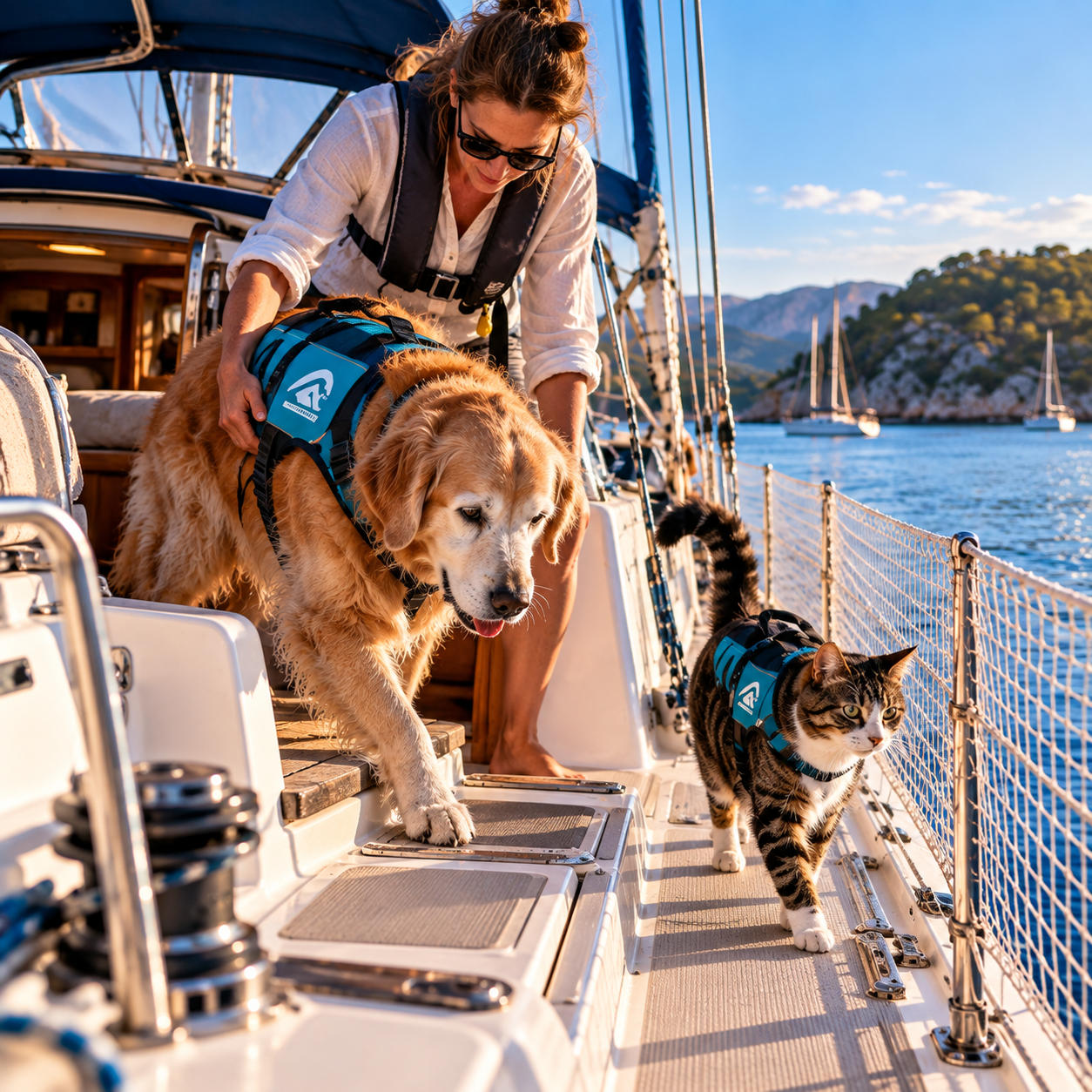
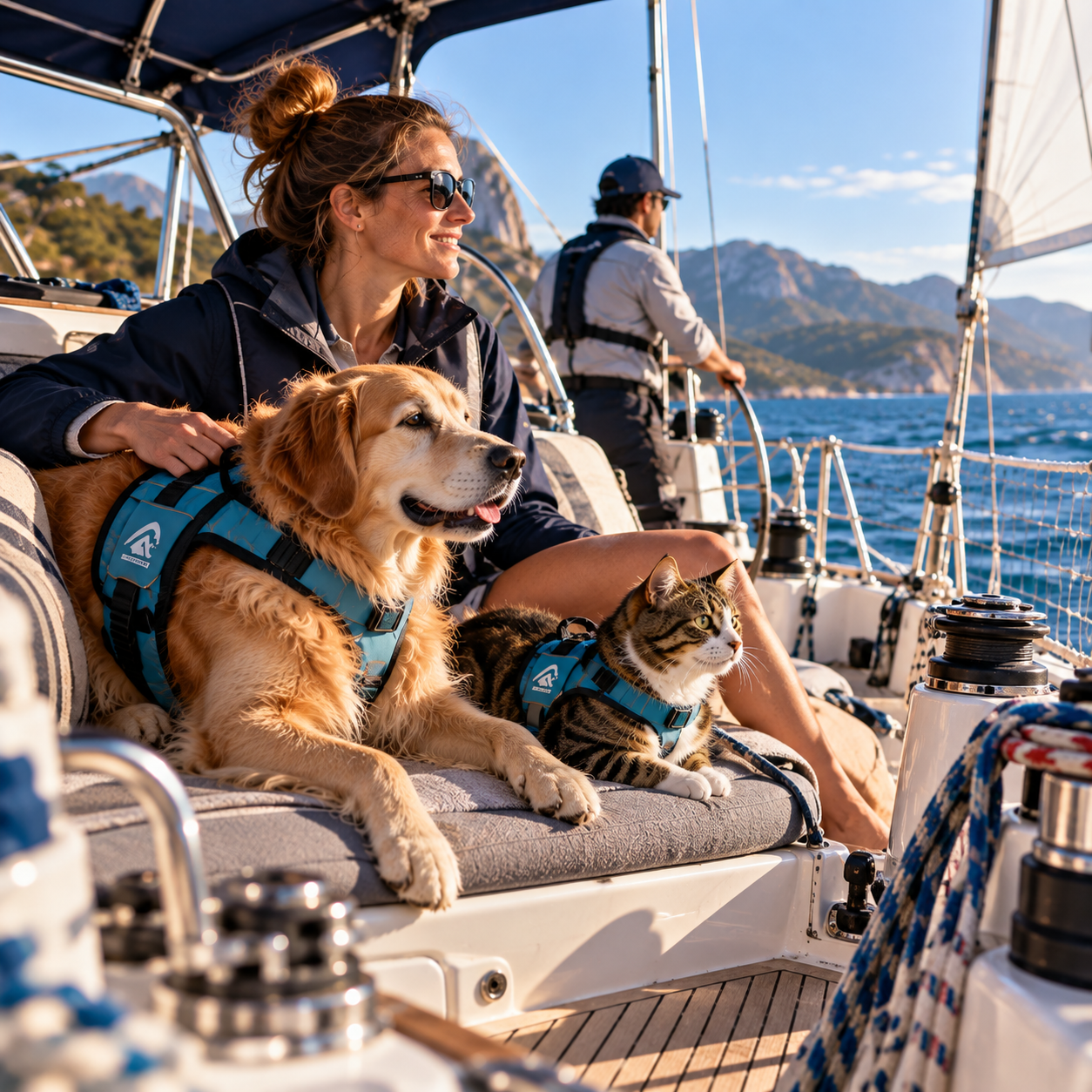
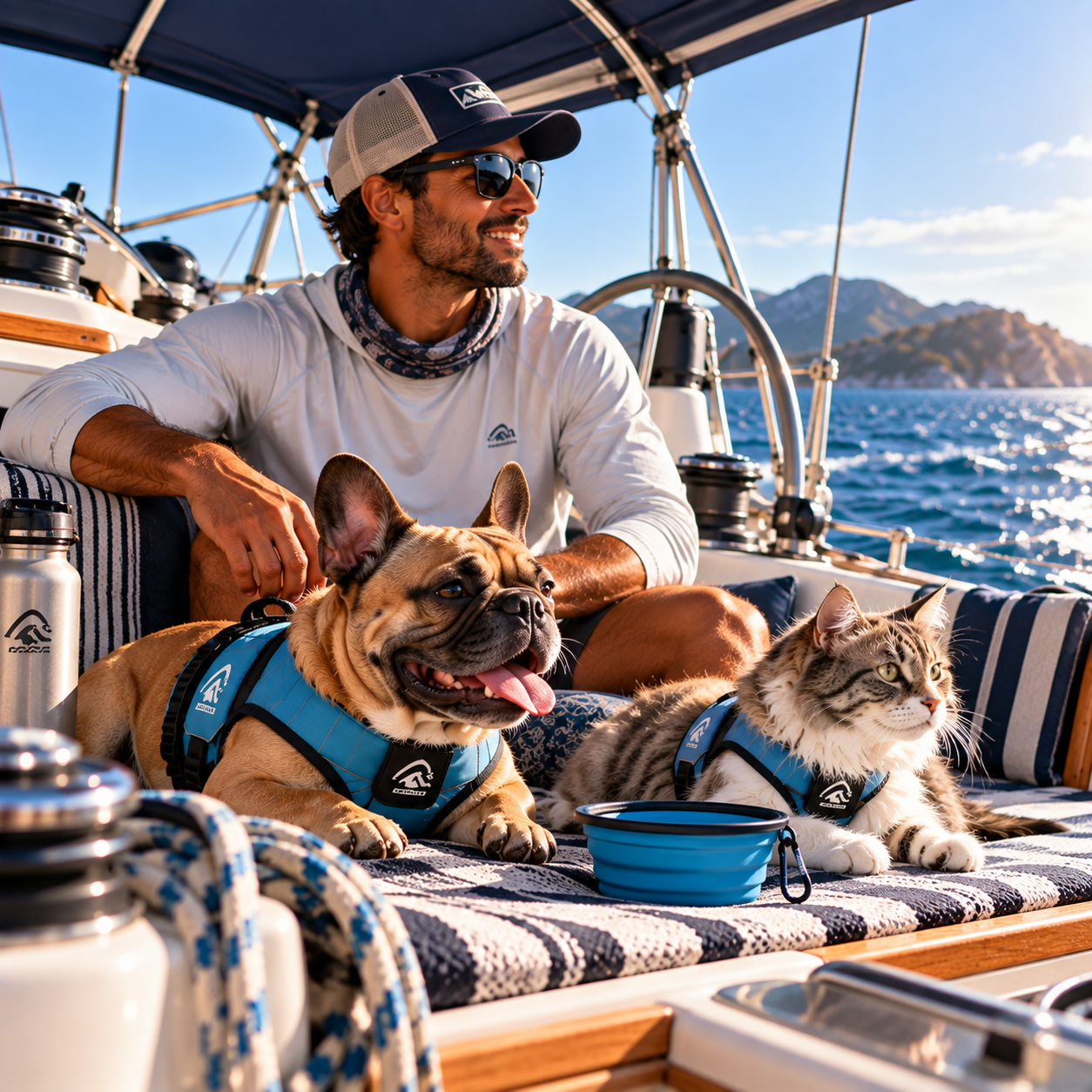
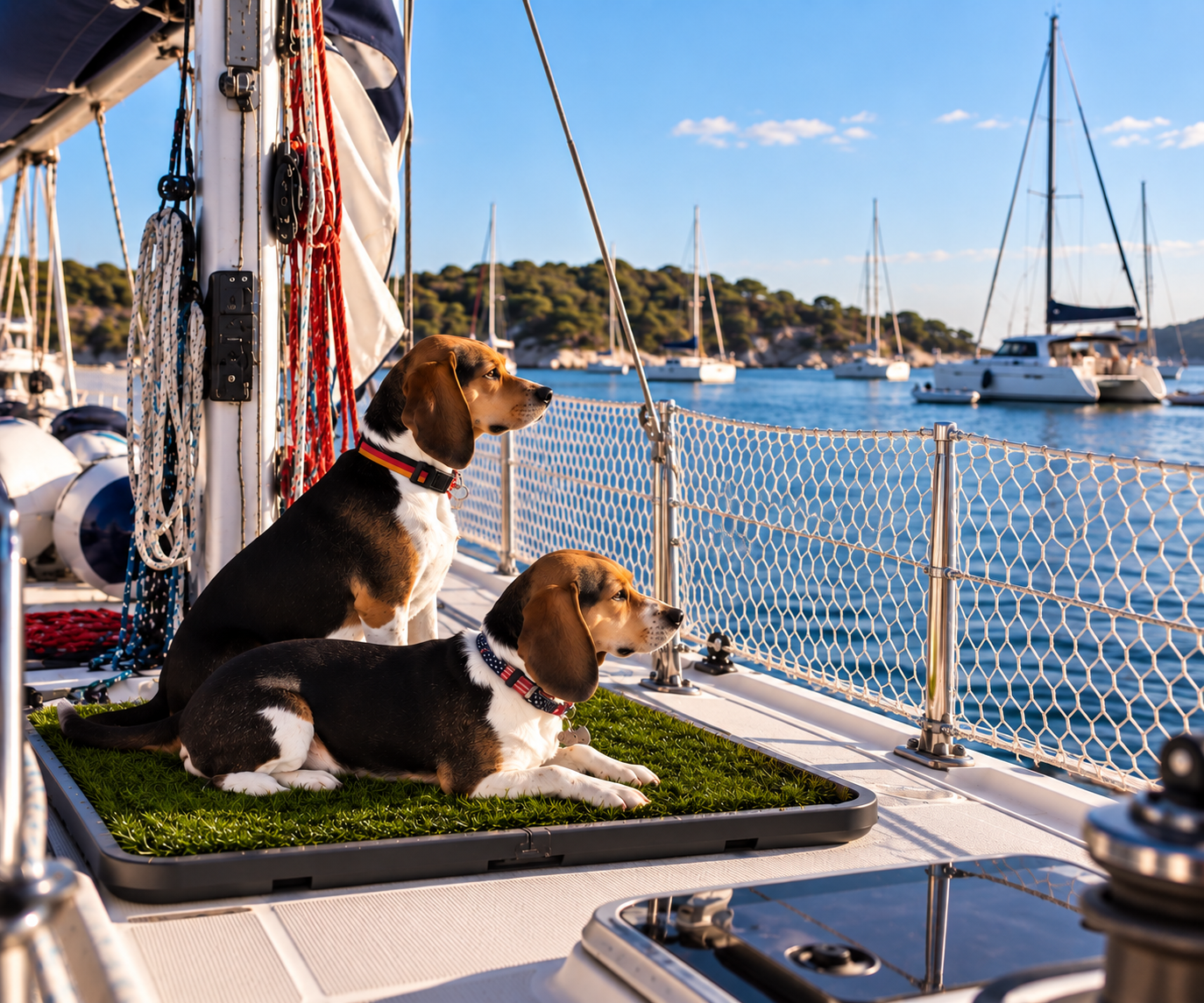
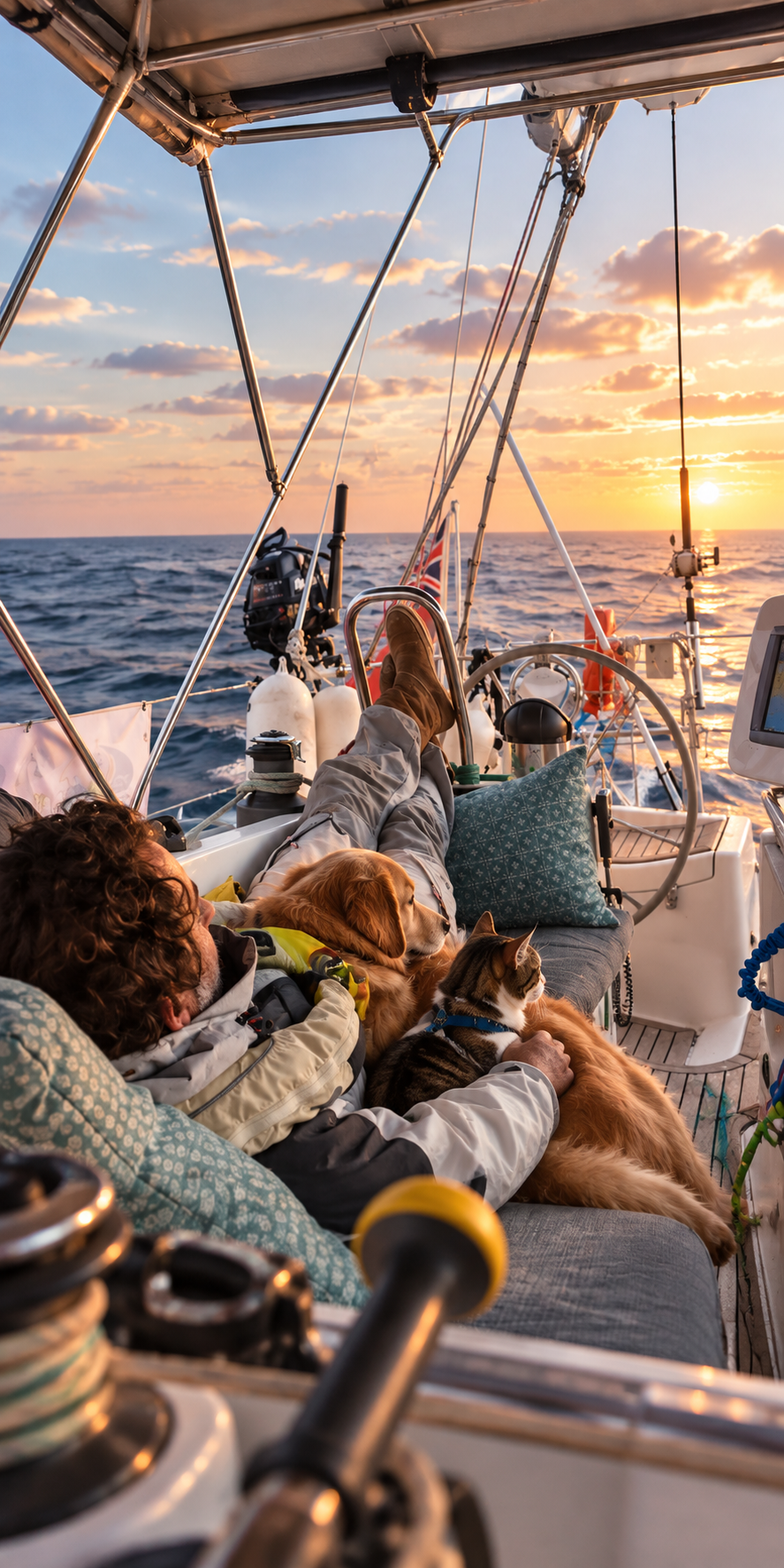
Sailing with a pet changes life aboard
Whether you’re new to sailing, adding a pet to a yacht you already know well, or already spending time aboard together, start by looking at the journey from your pet’s position.
Motion, confined spaces, heat, noise, boarding, changing routines and limited access to veterinary care can all affect how well a pet adapts to life on the water.
The aim is not simply to get your pet aboard — it is to make life aboard safe, workable and appropriate for your pet.
Is sailing right for your pet?
Not every pet will experience life aboard in the same way. Before changing the yacht or buying equipment, consider how your individual pet may cope with the environment and routines involved.
🐾 Health & mobility
Can your pet comfortably move, balance, rest and manage normal daily activities in a moving and sometimes confined environment?
🧠 Confidence & temperament
Consider how your pet responds to unfamiliar places, noise, movement, people, other animals and changes in routine.
🌊 Motion & balance
A yacht moves differently at anchor, underway and in changing conditions. Think about how your pet reacts when footing and surroundings are less predictable.
☀️ Heat & exposure
Sun, heat, wind, rain and limited shade can affect pets differently. Consider what protection and environmental control your pet may need.
🥣 Daily needs & routines
Feeding, drinking, toileting, exercise, sleep and downtime all need to remain workable aboard.
✚ Health care & emergencies
Consider medications, existing health needs and what you would do if your pet became sick or injured when veterinary care was not immediately accessible.
You are assessing suitability, not trying to solve every readiness task yet.
The next step is to understand what the yacht and life aboard will require.
A familiar yacht can be an unfamiliar environment for a pet
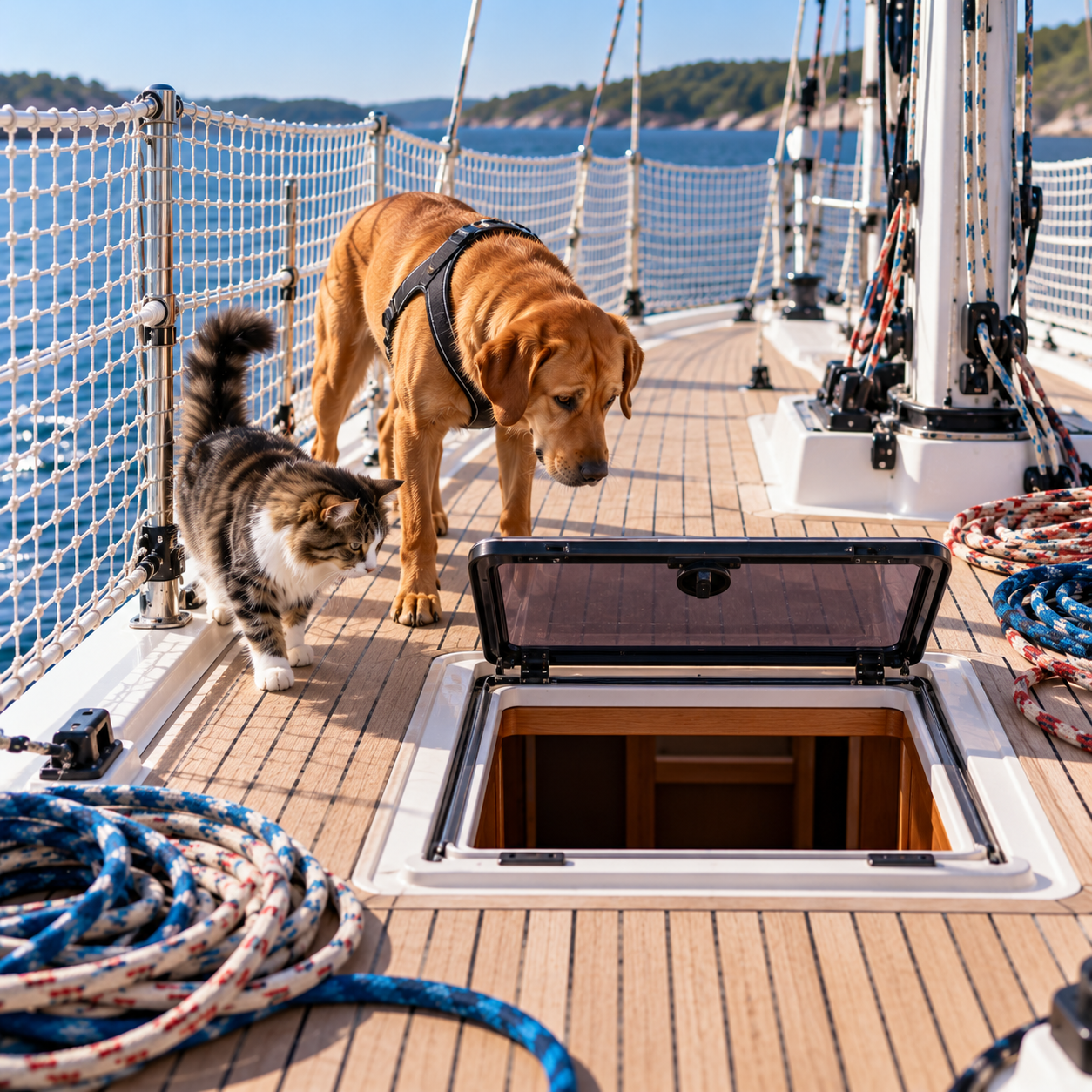
You may know every step, handhold and movement aboard. Your pet does not. Look at the yacht at their height, with their balance, mobility and behaviour in mind.
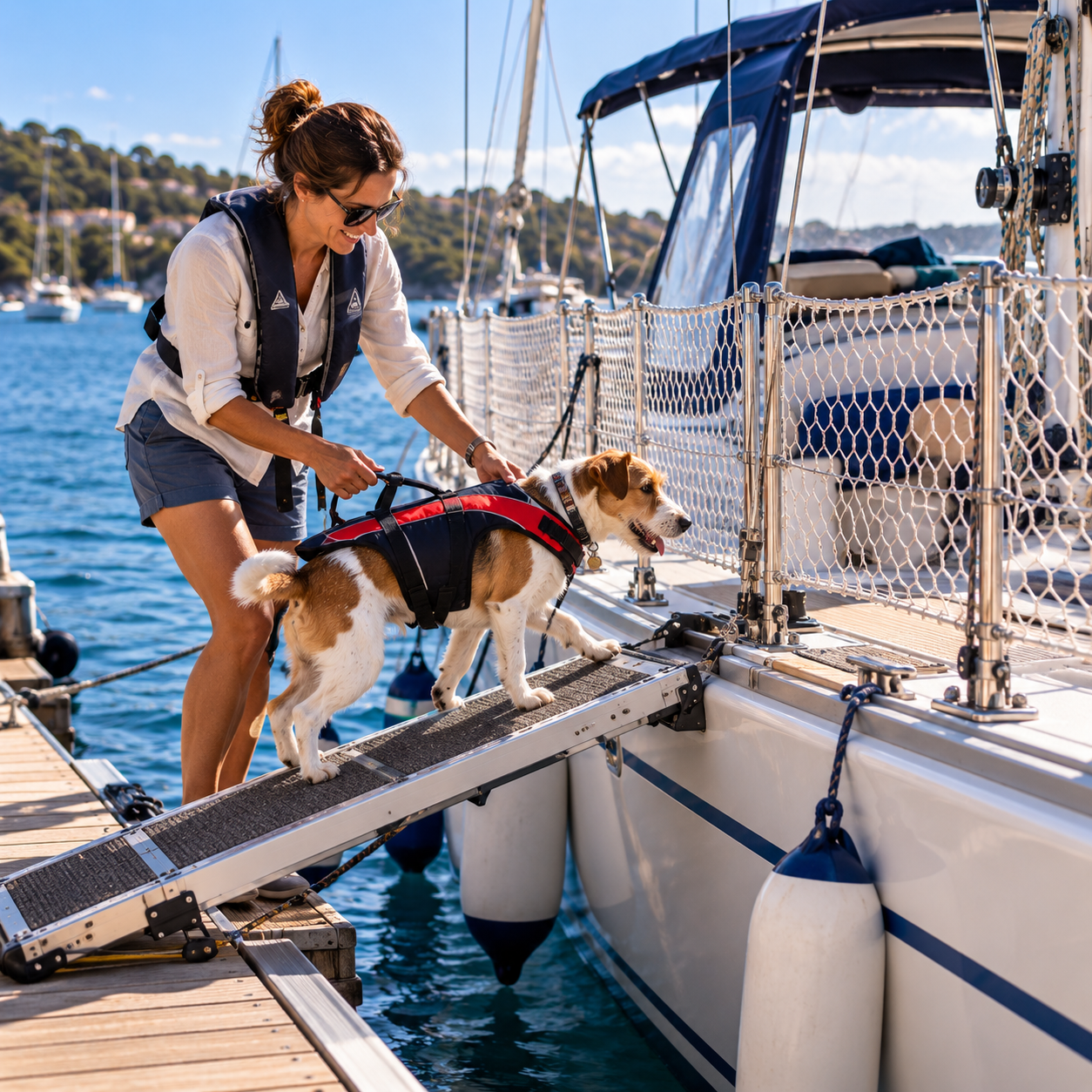
🪜 Getting on and off
How will your pet safely board from a pontoon, dock, tender or shore — and get back aboard again?
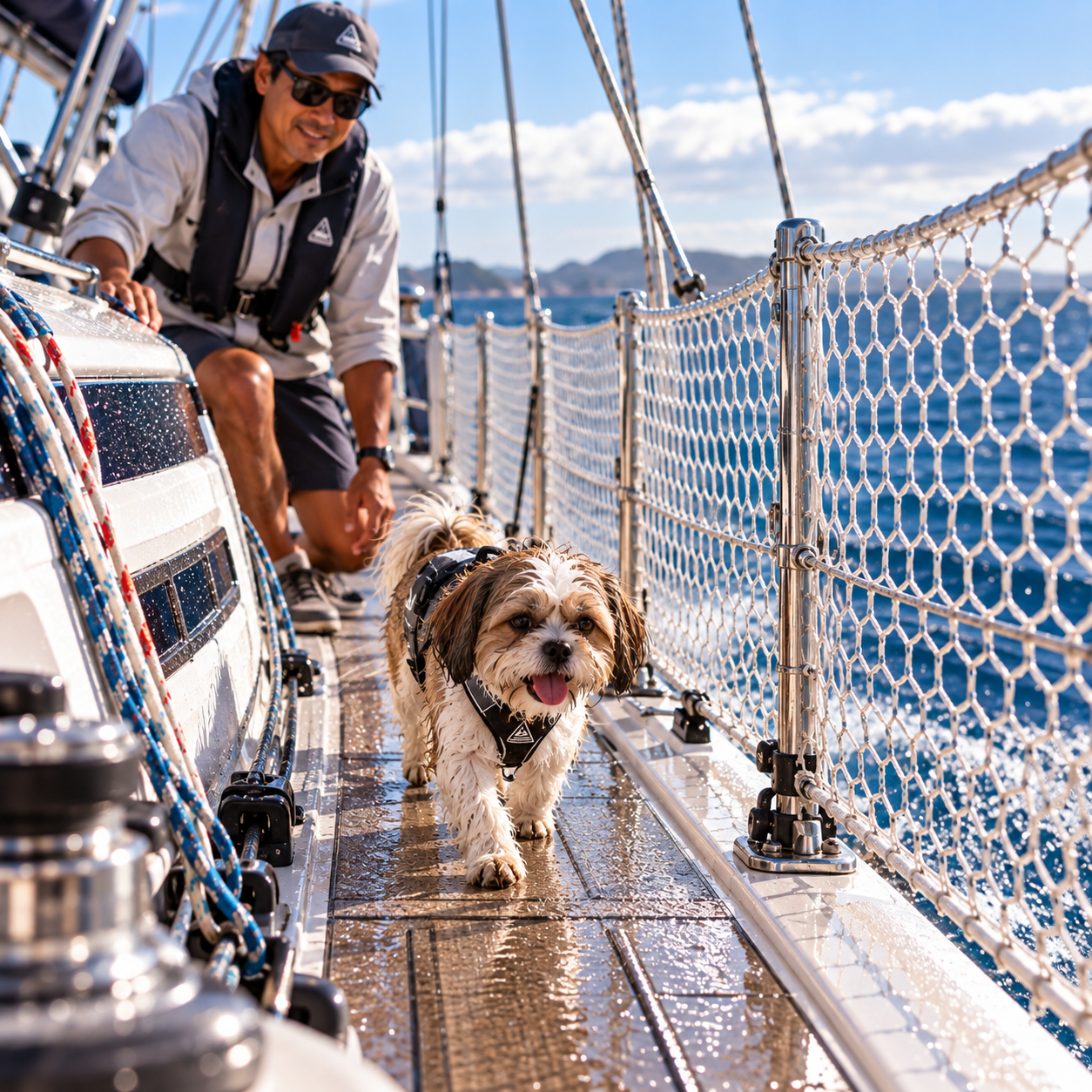
🐾 Moving around aboard
Consider slippery surfaces, companionways, steps, narrow passages, deck movement and places where your pet could become trapped or fall.
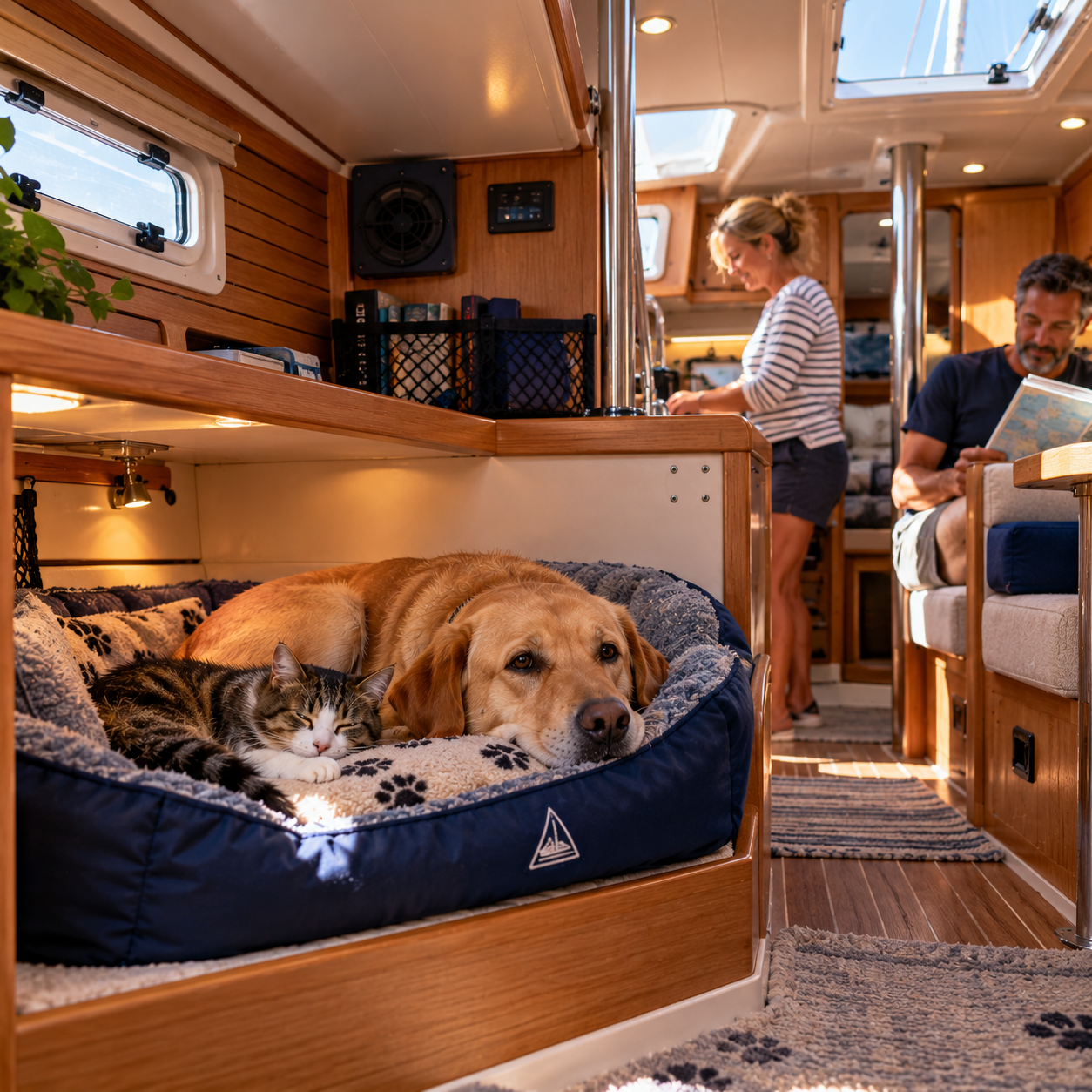
🛏 A safe place to settle
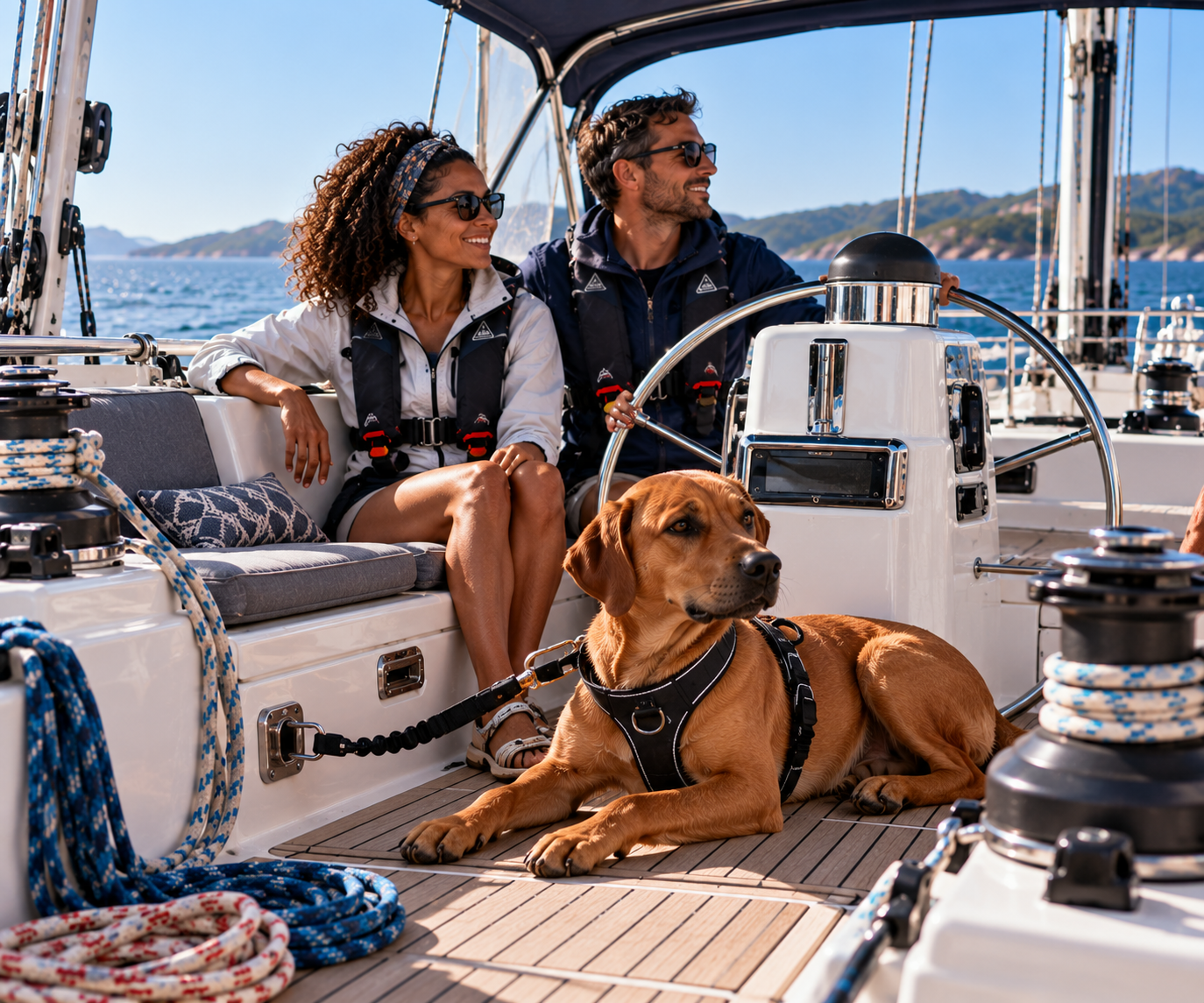
Your pet needs somewhere secure and comfortable to rest both above and below deck, when the yacht is stationary and when conditions change.
🛡 Preventing falls & escapes
Identify deck edges, openings, access points and situations where barriers, supervision, harnesses or other controls may be needed.
☀️ Restraint, shelter & ventilation
Consider shade, airflow, temperature, dry resting areas and appropriate restraint when underway or conditions change.
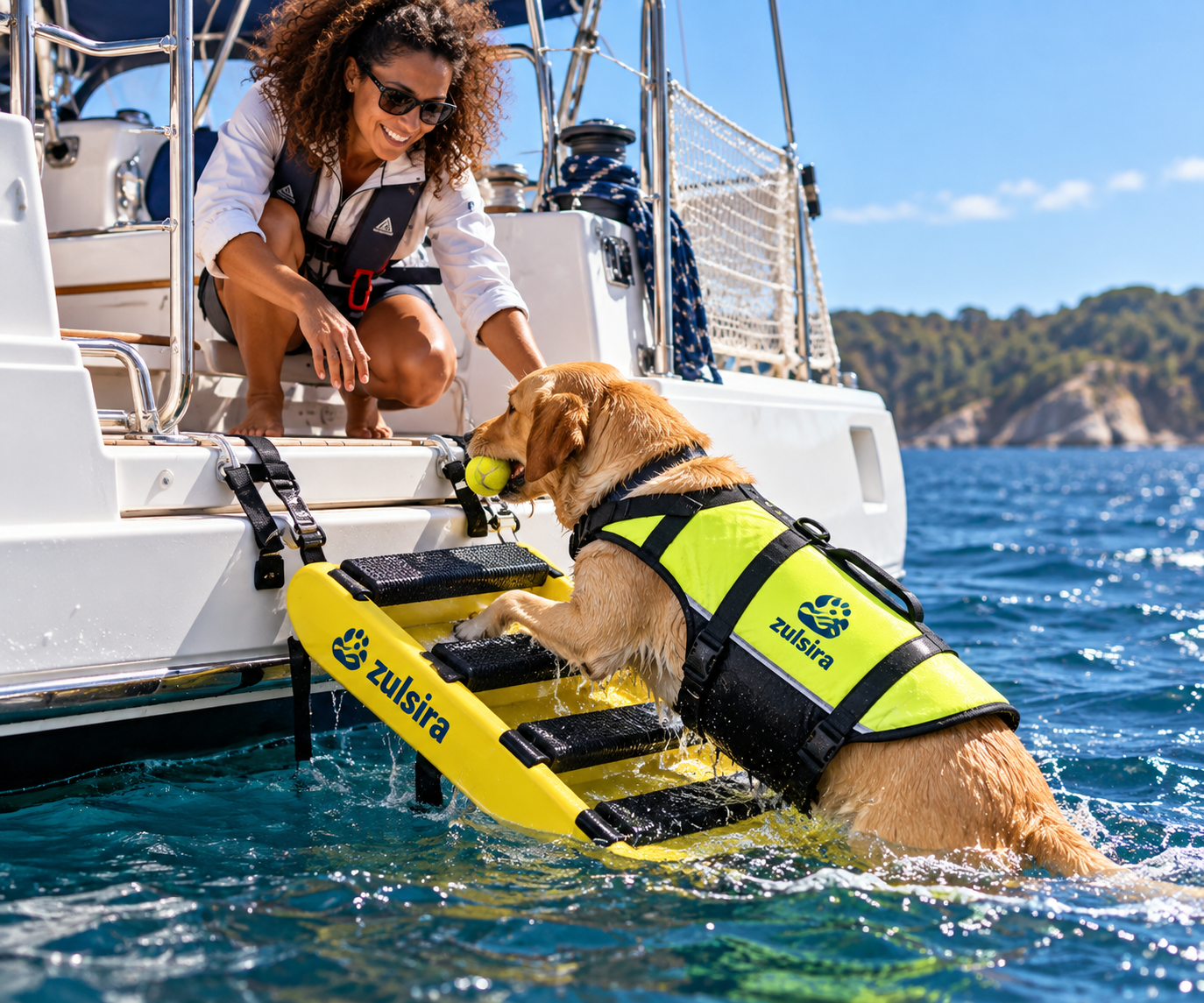
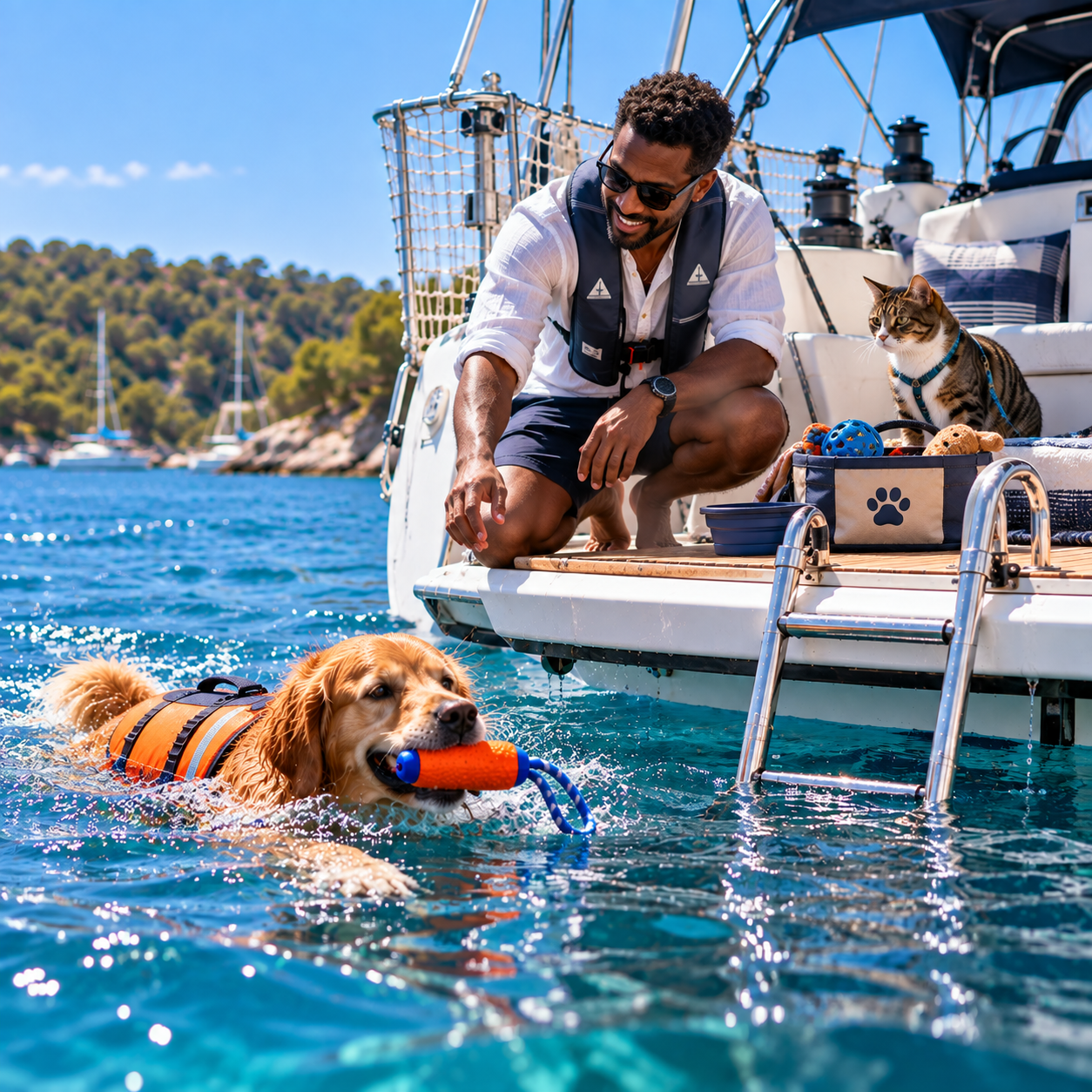
🌊 Getting your pet out of the water
Whether for normal swimming or an emergency pet-overboard, consider how you will get your pet safely back aboard.
You do not need to redesign your yacht today. First identify what may need attention.
Readiness will help you work through the individual changes.
Life aboard is more than yacht equipment
Your pet also needs routines that continue to work when life aboard, weather, movement and access to shore change.
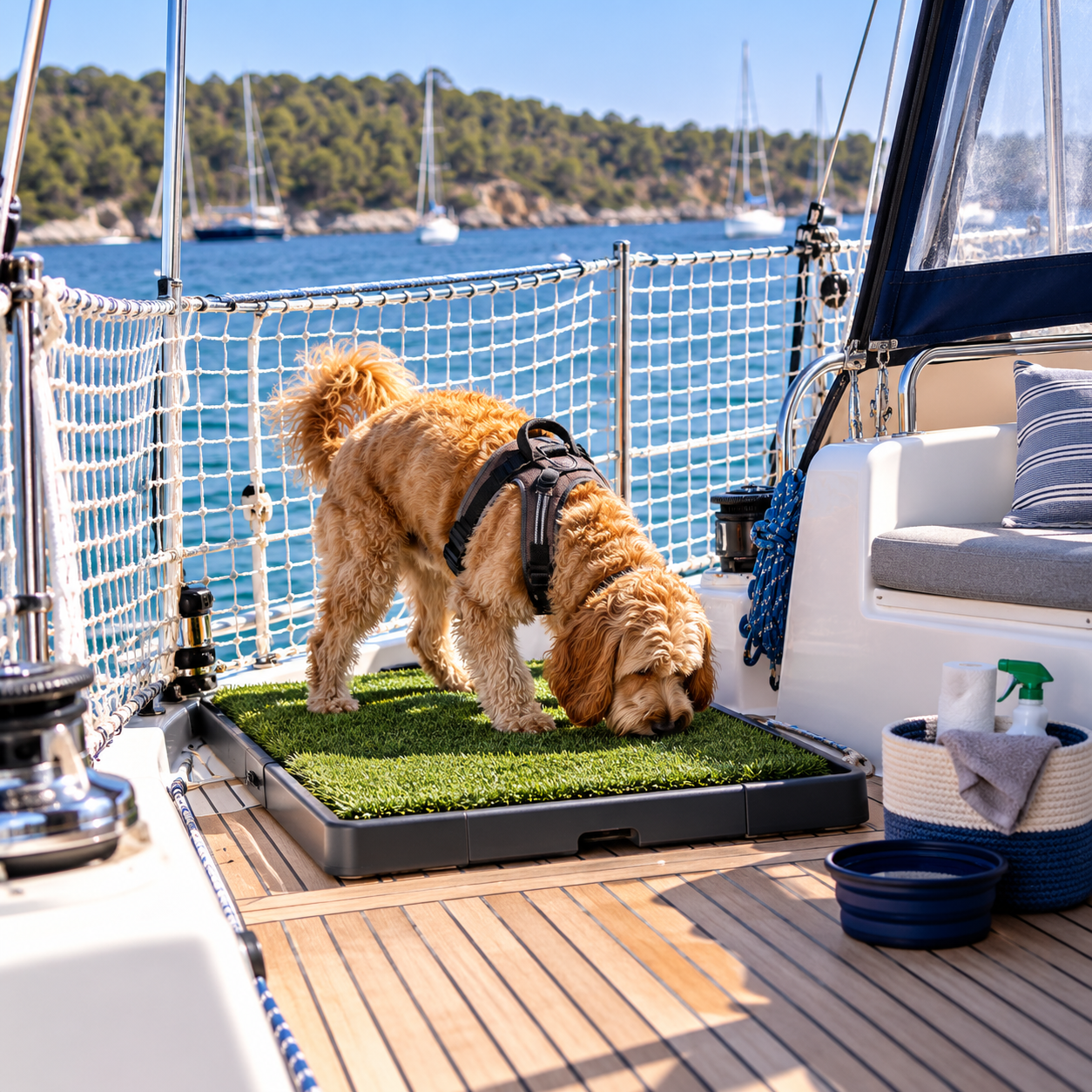
🚽 Toileting & hygiene
Where and how will your pet toilet, and how will you manage hygiene aboard?
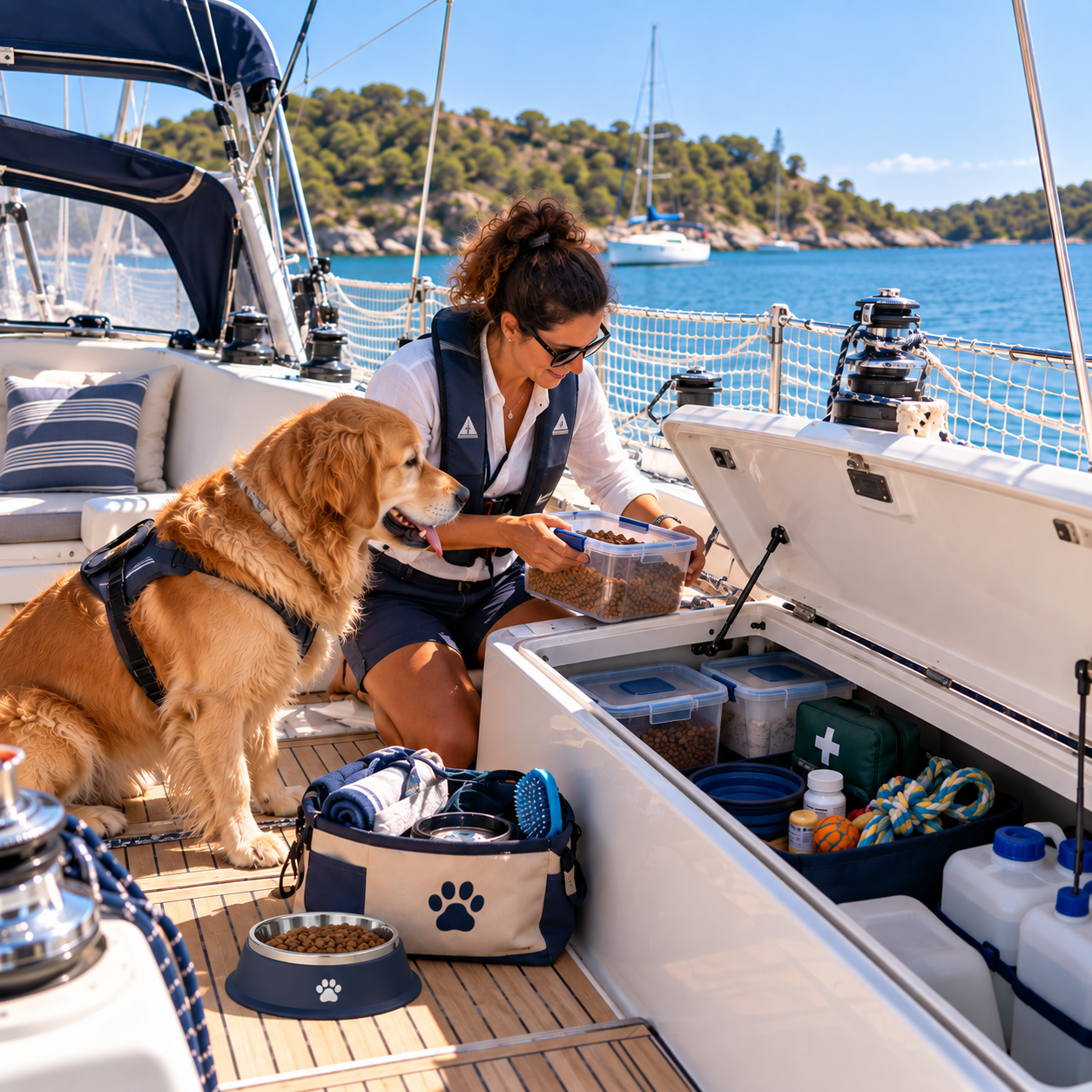
🥣 Food, water & supplies
How will normal feeding and hydration work underway, and what happens when supplies are less accessible?
🐕 Exercise & stimulation
How will your pet get suitable physical activity, enrichment and downtime?
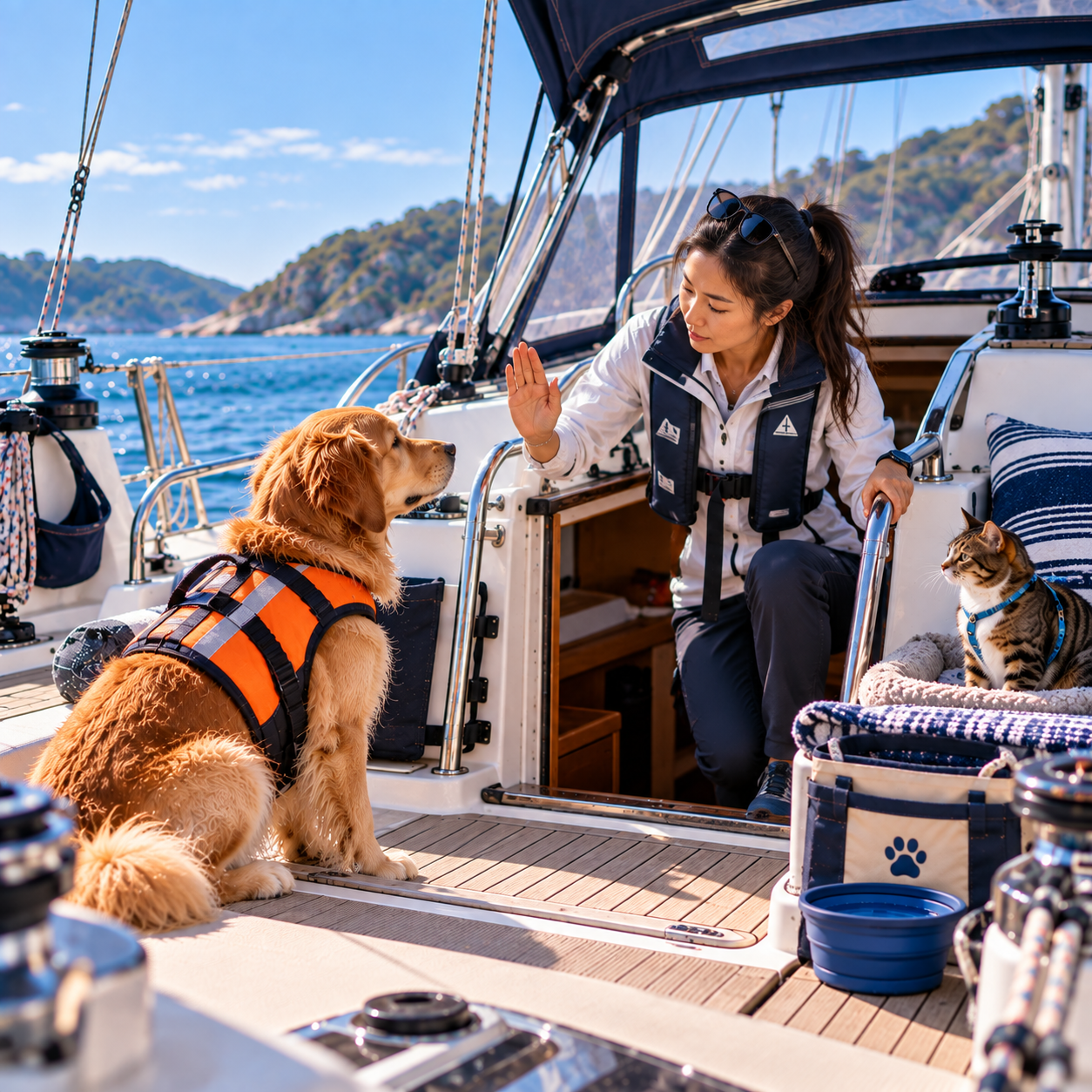
🐕🦺 Training & behaviour
Boarding, settling, recall, handling and emergency routines may need to work differently around a yacht.
These are readiness areas. You don’t need to complete them on this page.
What happens when you cannot simply drive to a vet?
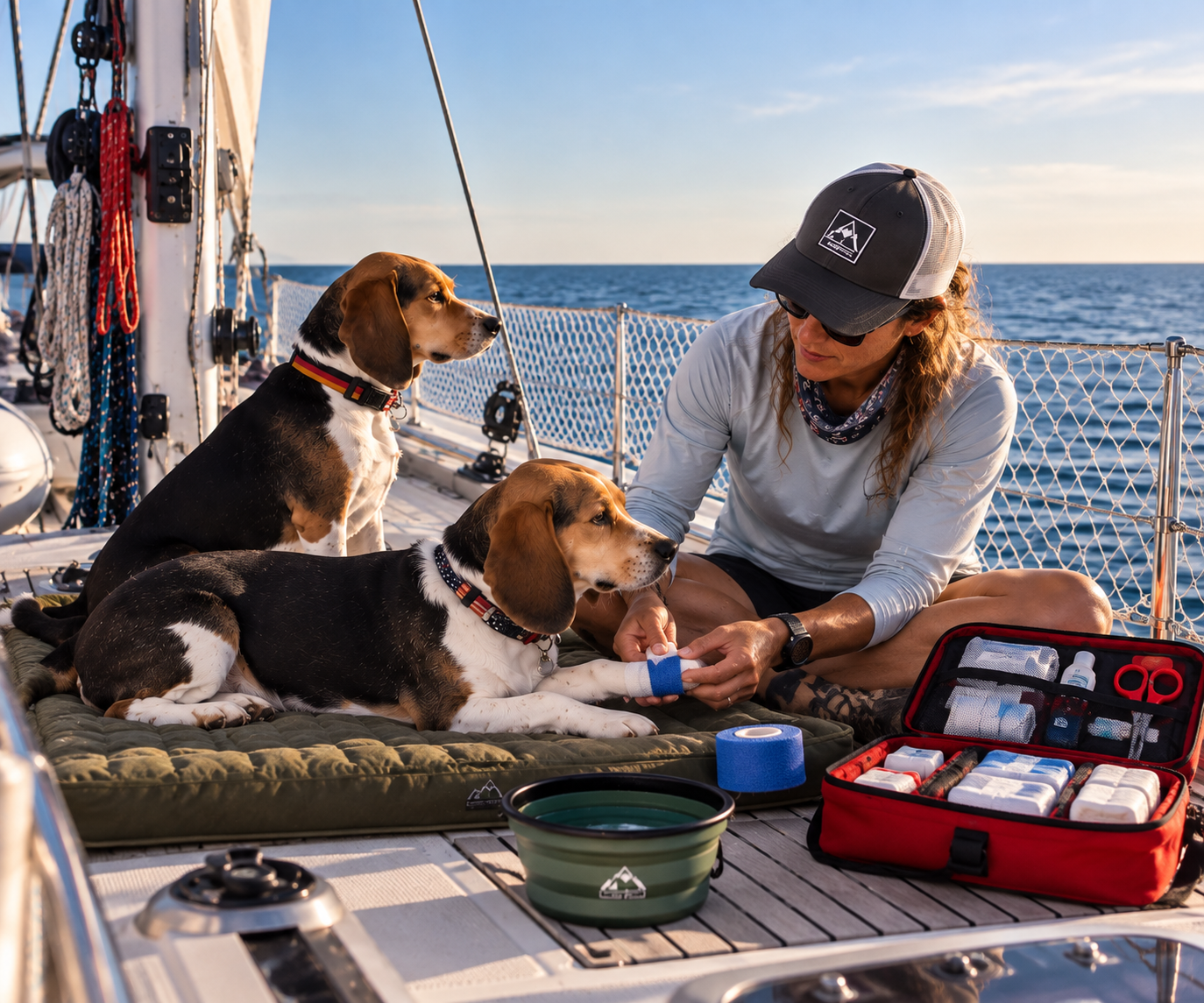
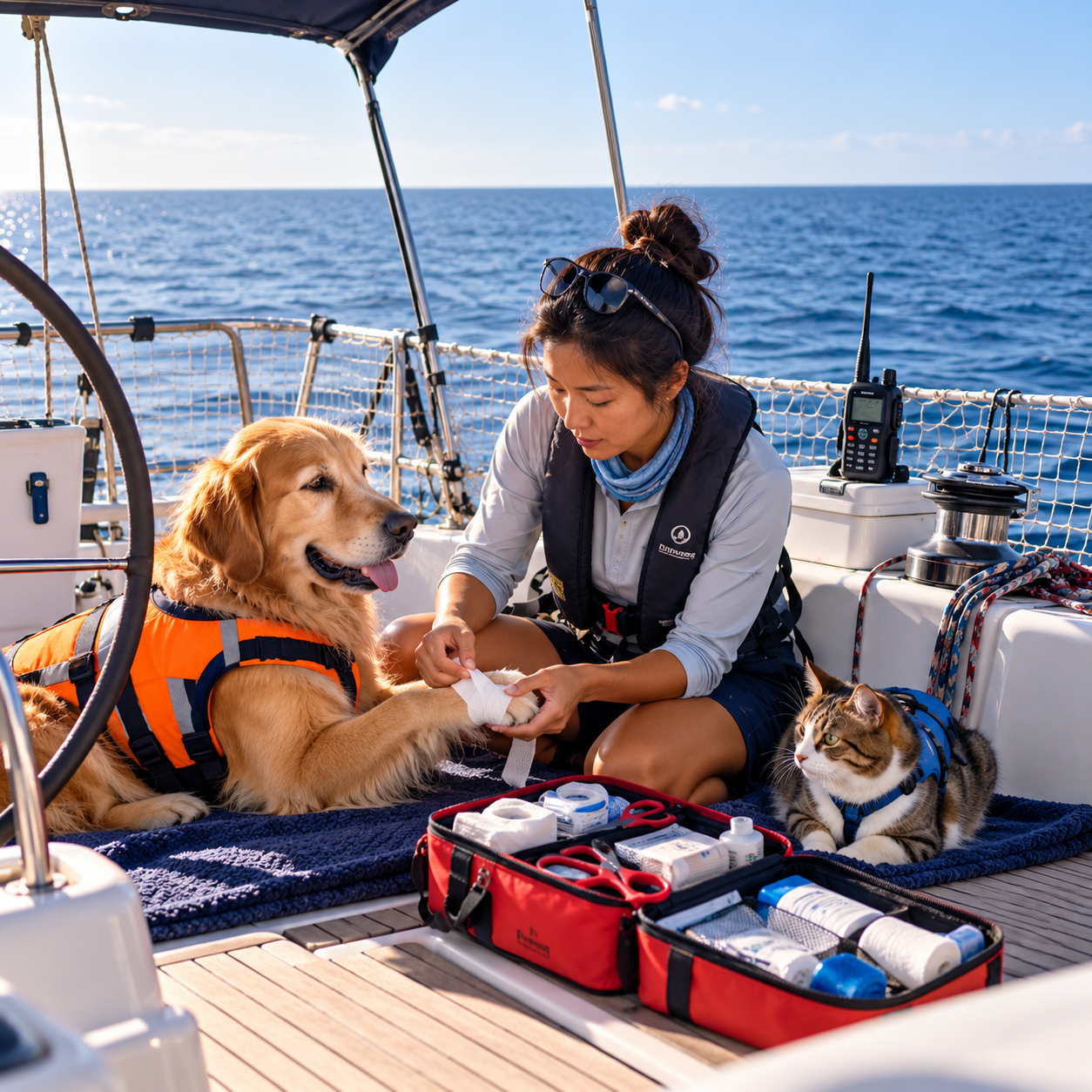
✚ Be ready to respond aboard
First aid, medications, emergency equipment and knowing how to stabilise your pet become more important when professional help is not immediately available.
📍 Have a plan for getting help
Think about communication, your location, reaching veterinary care, changing course or plans, and who could care for your pet if you could not.
How will you mainly sail with your pet?
Your core pet and yacht readiness is similar, but the amount of time aboard, access to support and complexity of the journey can change what needs greater attention.
Some readiness applies to every pet sailing journey.
Your pet needs to be comfortable and safe aboard, the yacht needs to work for your pet, daily routines need to be practical, and you need a plan for situations that do not go as expected.
ⓘ If you’re ready, choose the pathway that best matches how you sail. If your sailing includes an international border, choose Long-Term / International. If you don’t choose a pathway yet, ZULSIRA will continue to show you all information.
Your pathway helps ZULSIRA show the readiness information most relevant to your journey. It follows you as you move through ZULSIRA, and you can change it at any time using Change in the pathway bar above.
⛵ Local / Weekend Sailing
Day trips, weekends and shorter local sailing within one country.
For pets joining you aboard for shorter periods, generally in familiar waters where returning to shore and accessing familiar support is relatively practical.
How ZULSIRA describes Local / Weekend Sailing
Time aboard – Hours, days, weekends or shorter trips.
Your pet normally returns regularly to their usual land-based environment.
Pet’s normal base – Primarily land-based.
The yacht is part of your pet’s travel and recreation, rather than their main everyday living environment.
Where you sail – Local or familiar waters.
Returning to shore, changing plans or reaching assistance is generally more practical.
Daily routines – Need to work for shorter periods aboard.
Toileting, feeding, hydration, rest, exercise and settling need to work while sailing, but do not normally need to sustain extended life aboard.
Supplies & support – Generally accessible from shore.
Food, water, medication and other essentials can usually be planned around shorter trips and replenished relatively easily.
When plans change – Returning to shore is usually practical.
If your pet is not coping, conditions deteriorate or something goes wrong, shortening the trip or returning to familiar support is generally an option.
International travel — Use the Long-Term / International pathway.
If your sailing journey crosses an international border — even for a day sail, weekend or short trip — choose Long-Term / International Sailing so ZULSIRA can include the additional country, documentation, health and entry requirements that may apply.
Your readiness will focus on:
Pet comfort aboard · safe yacht setup · boarding & movement · daily routines · local emergency planning
⛵ Long-Term / Liveaboard / International Sailing
Extended cruising, liveaboard or any international sailing.
For pets spending extended periods aboard, living aboard or travelling internationally, where routines must work sustainably and access to supplies, veterinary care and familiar support may be more limited.
How ZULSIRA describes Long-Term / Liveaboard Sailing
Time aboard – Extended periods, months or ongoing life aboard.
Your pet may remain aboard for long periods rather than regularly returning to their usual land-based environment.
Pet’s normal base – The yacht becomes a significant part of everyday life.
Your pet needs to be comfortable living aboard, not simply joining you for individual sailing trips.
Where you sail – Longer, changing or more remote journeys.
Familiar shore-based support may become less accessible as your journey, location and conditions change.
Daily routines – Need to remain sustainable over time.
Toileting, feeding, hydration, rest, exercise, stimulation, training and safe movement need to continue working as normal parts of life aboard.
Supplies & support – May be less accessible or predictable.
Food, medication and other essentials may need to be carried for longer periods or replaced in unfamiliar places, while veterinary care may be farther away.
When plans change – Returning to familiar support may not be practical.
Your readiness needs to account for delays, changing conditions, emergencies and periods when immediate shore-based alternatives are limited.
International travel — Included in this pathway.
Choose this pathway if you will cross an international border, even if the sailing itself is only a day trip or weekend. ZULSIRA will combine the relevant sailing readiness with the country, documentation, health and entry requirements that apply to your journey.

Your readiness includes the local foundations, plus:
Extended life aboard · sustainable routines · supplies · remote veterinary planning · changing conditions · international & country requirements where applicable
Continue into your pet & yacht readiness
You don’t need to make your pet and yacht ready all at once. ZULSIRA will guide you through the readiness areas that apply to your pet, your yacht and the way you plan to sail.
1. Know your starting point
Understand your pet, yacht and the type of sailing you plan to do.
2. Work through your readiness
ZULSIRA will help you work through your pet, vehicle and day-to-day readiness. If you’ve selected a pathway, your information will be focused around the way you plan to travel.
3. Add journey requirements when needed
When borders, countries or flying become part of the journey, add those requirements without changing your underlying sailing readiness.
If you’ve selected a pathway, it will come with you. Otherwise, you’ll continue to see all information.