

Pet Readiness & Care
Training readiness is about whether your pet has learned the skills needed to travel safely.
Good health and good setup are not enough if your pet does not understand what to do in new or changing environments.
This category focuses on the behaviour skills that help pets move safely and cope in vehicles, yachts, campsites, and unfamiliar places.
These skills also support safety during unexpected situations, where pets may need to be handled or controlled quickly.
This includes:
● toilet and hygiene behaviour
● movement and position skills
● settling and rest skills
● motion and noise tolerance
● handling and control acceptance
● safety boundaries and awareness
Training develops gradually. Skills should be reliable in calm conditions before adding movement, noise, or distraction.
Some training skills also support emergency situations where pets may need to be guided, restrained, or moved quickly.
Training & behaviour readiness areas
First Aid Training
Do I have the skills to provide first aid for my pet in an emergency?
Prepare & learn the first-aid skills needed to respond to a pet emergency — wherever you are
First Aid Training readiness
Builds reliable toileting in travel environments.
🌍 All Travel Environments

What must be in place
✅
What can go wrong if not in place
⚠️
What new risks or pressures this may create
ℹ️️
Related systems to check
● tether points & attachment points ● barriers & separation between areas ● safe escape routes
Ready to work on this area?
Find guides, checklists, how-to guidance and pathway-specific advice.
Toilet & hygiene training
Can my pet toilet reliably in the places and conditions we will travel in?
Teaching your pet where and when to toilet in travel environments.
Toilet & hygiene readiness
Builds reliable toileting in travel environments.
🌍 All Travel Environments
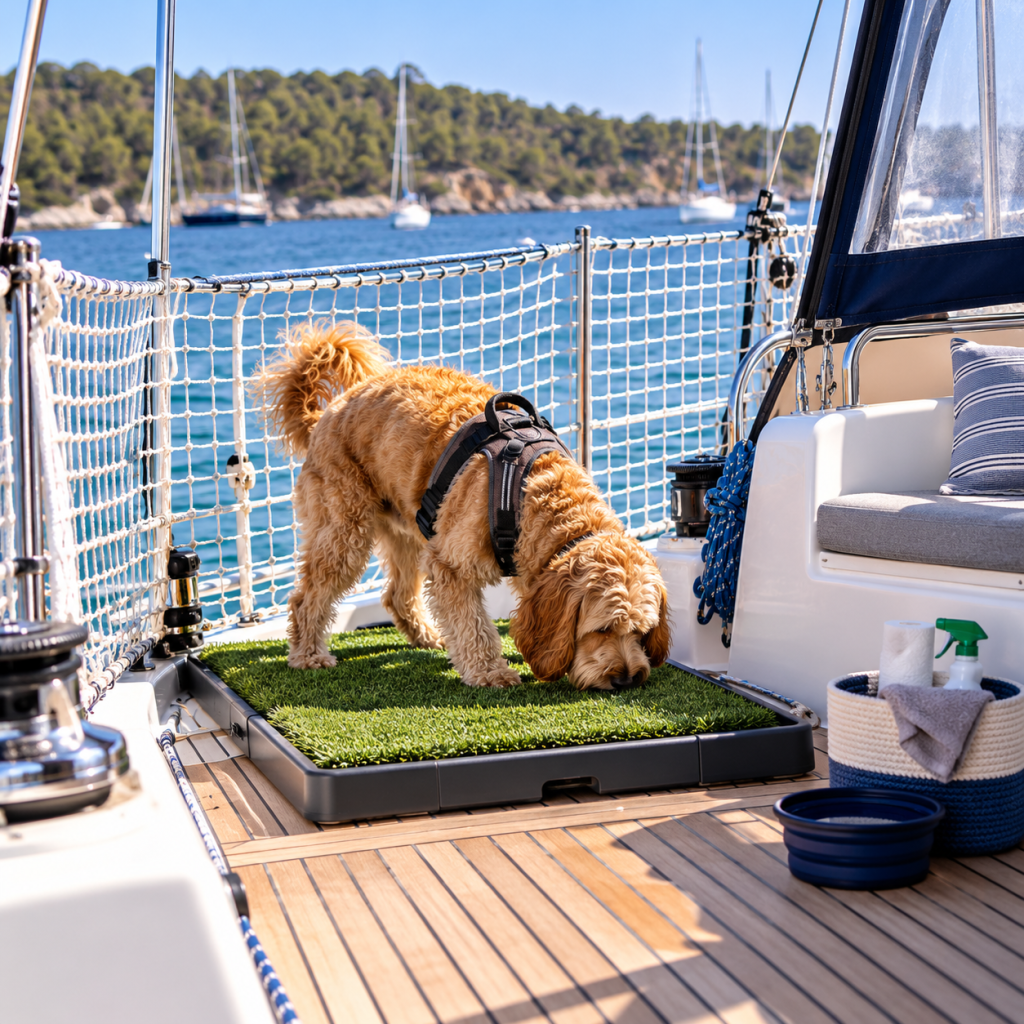
What must be in place
✅ A clear toileting cue or routine
✅ Acceptance of the travel toilet surface (grass, mat, turf, litter, ground area)
✅ Ability to toilet on lead where needed
✅ Ability to toilet in new locations
✅ Tolerance for small or slightly moving areas
✅ Predictable holding between opportunities
✅ No panic linked to noise or motion
✅ Routine that works in different places
✅ Toileting without
✅ Ability to toilet despite mild weather changes
What can go wrong if not in place
⚠️ Refusal to toilet causing stress or discomfort
⚠️ Accidents inside living areas
⚠️ Hygiene problems in confined spaces
⚠️ Stress from holding too long
⚠️ Disruption to travel plans
What new pressures training may create
ℹ️️ Routine becoming too rigid
ℹ️️ Surface preference becoming too narrow
ℹ️️ Temporary regression in new environments
Related systems to check
● tether points & attachment points ● barriers & separation between areas ● safe escape routes
Ready to work on this area?
Find guides, checklists, how-to guidance and pathway-specific advice.
Movement & position skills
Can my pet move safely and stay where they should during activity?
Helping your pet move safely and stay in the right places during activity.
Toilet & hygiene readiness
Builds reliable toileting in travel environments. What must be in place
🌍 All Travel Environments
What must be in place
✅
What can go wrong if not in place
⚠️
What new risks or pressures this may create
ℹ️️
Related systems to check
● tether points & attachment points ● barriers & separation between areas ● safe escape routes
Ready to work on this area?
Find guides, checklists, how-to guidance and pathway-specific advice.
Settling & rest skills
Can my pet relax and rest calmly when nothing is happening?
Teaching your pet to switch off and rest during downtime or travel.
card 4 - detail
Builds reliable toileting in travel environments. What must be in place
🌍 All Travel Environments
What must be in place
✅
What can go wrong if not in place
⚠️
What new risks or pressures this may create
ℹ️️
Related systems to check
● tether points & attachment points ● barriers & separation between areas ● safe escape routes
Ready to work on this area?
Find guides, checklists, how-to guidance and pathway-specific advice.
Motion & noise tolerance
Can my pet cope with vibration, motion, and unfamiliar sounds?
Helping your pet stay calm with vibration, movement, and unfamiliar sounds.
card 5 - detail
Builds reliable toileting in travel environments. What must be in place
🌍 All Travel Environments
What must be in place
✅
What can go wrong if not in place
⚠️
What new risks or pressures this may create
ℹ️️
Related systems to check
● tether points & attachment points ● barriers & separation between areas ● safe escape routes
Ready to work on this area?
Find guides, checklists, how-to guidance and pathway-specific advice.
Safety boundaries & awareness
Does my pet avoid hazards and wait when it matters?
Teaching your pet to respect edges, doors, traffic zones, and other hazards.
card 6 - detail
Builds reliable toileting in travel environments. What must be in place
🌍 All Travel Environments
What must be in place
✅
What can go wrong if not in place
⚠️
What new risks or pressures this may create
ℹ️️
Related systems to check
● tether points & attachment points ● barriers & separation between areas ● safe escape routes
Ready to work on this area?
Find guides, checklists, how-to guidance and pathway-specific advice.
Handling, restraint & emergency control
Does my pet to accept lifting, restraint, and close handling.
Preparing your pet to accept lifting, restraint, and close handling.
card 7 - detail
Builds reliable toileting in travel environments. What must be in place
🌍 All Travel Environments
What must be in place
✅
What can go wrong if not in place
⚠️
What new risks or pressures this may create
ℹ️️
Related systems to check
● tether points & attachment points ● barriers & separation between areas ● safe escape routes
Ready to work on this area?
Find guides, checklists, how-to guidance and pathway-specific advice.
🏞
Continue your readiness
Start with the areas that matter most to your pet & your journey, then review and build on them as circumstances change.
Pet Readiness & Care
Pet readiness is about whether your pet can safely cope with travel before you plan routes, equipment, or paperwork.
It covers health, physical ability, behaviour, and daily care — the factors that decide whether travel is realistic, not just possible.
Pets experience travel very differently from humans.
They depend entirely on your decisions.
A good setup reduces risk.
It cannot make an unready pet safe.
Pet readiness areas
Pet readiness is organised around the key checks that determine whether travel is safe before you move into setup or planning.
Most owners work through these in the same order — starting with a veterinary health check and ending with daily care.
Within each area you will find:
● what needs to be in place
● what can go wrong if it is not
● what may need to change
● how to recognise stable readiness
This helps you build readiness step-by-step before moving into setup and planning.
Veterinary health check
Is your pet healthy enough to travel right now?
Make sure your pet is medically fit before travel begins.
b Vaccines & timing
Are vaccines complete and correctly timed for travel?
Make sure vaccines are up to date and given early enough for your travel plans.
c Microchip & identification
Can my pet be reliably identified everywhere we go?
Ensure identification is accurate and matches all records and documents.
d Physical ability
Can your pet move safely and cope with travel conditions?
Check strength, balance, and ability to recover under movement.
e Stress & behaviour readiness
Can your pet cope with confinement, motion, and routine change?
Make sure your pet can handle small spaces, movement, noise, and new environments.
f Consistent daily care
Can you maintain feeding, medication, and hygiene during travel?
Ensure daily care remains stable even when routines change.
Pet readiness & care modules
Pet readiness is organised around the key checks that show whether travel is safe before you move into setup or paperwork.
These checks follow the same order most owners experience — starting with a veterinary health check and ending with consistent daily care.
Each section below explains:
● what must be in place
● what can go wrong if it is not
● what new risks or pressures this may create
Veterinary health check
Make sure your pet is medically fit before travel begins.
What must be in place
● A full veterinary check completed
● Chronic conditions reviewed and stable
● Vaccinations reviewed
● Rabies status confirmed (if required)
● Parasite protection up to date
● Medication needs discussed
● Travel plans discussed with your vet
What can go wrong if not in place
● Medical problems worsening during travel
● Stress causing avoidable deterioration
● Limited options if far from care
What new risks or pressures this may create
● Extra tests delaying departure
● Medication changes affecting tolerance
Vaccines & timing
Make sure vaccines are valid and timed correctly for travel.
What must be in place
● Rabies vaccination within valid period
● Vaccines given early enough before departure
● Correct order of microchip and rabies (if required)
● Titre test completed within valid timeframe (if required)
● Waiting periods accounted for
● Certificates dated within valid windows
What can go wrong if not in place
● Travel refusal
● Quarantine
● Invalid paperwork at inspection
What new risks or pressures this may create
● Re-vaccination restarting waiting periods
● Tight timelines increasing pressure
Microchip & identification
Make sure your pet can be clearly identified everywhere you travel.
What must be in place
● Compliant microchip implanted and readable
● Microchip registration up to date
● Details matching across all records
● Documents showing correct identification
What can go wrong if not in place
● Identity cannot be verified
● Paperwork rejected
● Travel delay or refusal
What new risks or pressures this may create
● Mismatched details needing correction
● Administrative delays
Physical ability
Make sure your pet can cope physically with travel movement and surfaces.
What must be in place
● Healthy joints and mobility
● No unresolved injury
● Ability to balance under movement
● Strength to recover from small slips
What can go wrong if not in place
● Falls during movement
● Fatigue
● Avoidable injury
What new risks or pressures this may create
● Overestimating ability
● Age-related decline
Stress & behaviour readiness
Make sure your pet can cope with travel stress.
What must be in place
● Appetite remains stable during change
● Toileting remains predictable
● Manageable response to noise or vibration
● Recovery from short-term stress
● No extreme panic in confined spaces
What can go wrong if not in place
● Refusal to eat or drink
● Stress-related toileting problems
● Panic during movement
What new risks or pressures this may create
● Stress building over time
● Delays increasing pressure
Consistent daily care
Make sure daily care remains reliable during travel.
What must be in place
● Feeding schedule adaptable
● Medication timing reliable
● Water intake consistent
● Toileting routine transferable
● Grooming manageable
What can go wrong if not in place
● Missed medication
● Dehydration
● Hygiene problems
What new risks or pressures this may create
● Rigid routines increasing stress
● Increased care needs in remote areas
