

🐾 Preparing Your Pet for Sailing
Health, training, documentation, and onboard readiness for a safe life at sea.
Before modifying your yacht, you must prepare your pet. Sailing places unique demands on animals — motion, noise, confinement, climate exposure, and international regulations. And some steps must be initiated many months before departure.
You’ll learn how to prepare:
• 🩺 Health & vaccinations
• 📄 Passports & international paperwork
• 🐕 Training & behaviour at sea
• 🎒 Equipment & personal gear
• 🧠 Emotional readiness & stress support
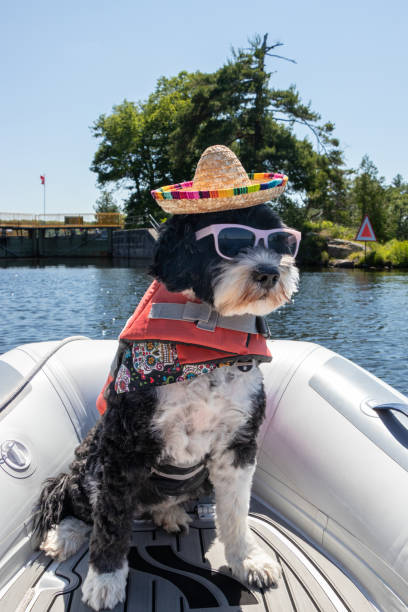
The guide is structured into sections to help you navigate all the areas that need to be addressed to get your pet ready for international sailing. Refer for the full guide section for detailed instructions
🩺 Health & Veterinary Preparation
How to prepare your pet so your pets are safe, confident, and comfortable at sea. Every pet is different and have different needs.
Life on the water places very different physical and mental demands on animals than life ashore. Constant motion, unfamiliar sounds, tighter spaces, changing climates, and limited access to veterinary care mean that your pet must be medically stable, physically capable, and resilient before sailing begins. A full veterinary assessment is not just about vaccinations — it is about understanding whether your pet is suited to a marine lifestyle and identifying any risks that need to be managed before you leave land-based support behind.
This stage should assess overall fitness, joint health, heart and respiratory function, dental condition, weight, anxiety levels, and any chronic illnesses. It is also the time to discuss sea sickness, heat tolerance, emergency medication options, and how to handle injuries or illness while offshore or in remote areas.
Best practice:
Choose a primary vet who understands long-term travel, and establish a full baseline health record before you begin sailing.
🩺 1. Veterinary Clearance & Baseline Health
Confirm Your Pet is Fit for Life at Sea
Before sailing, pets should have a full health assessment to identify conditions that could be worsened offshore.
- Full veterinary examination
- Heart, lung, joint, and dental check
- Bloodwork if sailing remotely
- Parasite screening
- Weight and nutrition assessment

Best practice:
Establish a veterinary baseline and keep digital and printed copies onboard.
💉 2. Vaccinations & Disease Protection
Core and Travel-Specific Immunisations
Vaccination requirements change by country and region. Many countries or entry ports will request proof. Verify requirements in the country guides*
- Core vaccines (rabies, distemper, parvo, feline viral diseases)
- Leptospirosis (highly relevant around marinas)
- Bordetella for high-traffic ports
- Region-specific vaccines
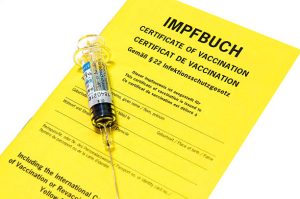
- Vaccine book stamped and signed
Best practice:
Start vaccinations at least 6–9 months before international sailing.
* ⚠️ Disclaimer: Paws on Deck make every effort to have all the latest official information available. However, Governments can change requirements at any time, therefor double check country specific government websites (Link on Country Guide) to verify the latest vaccine and entry requirements. Please help us keeping information current by informing us with the ‘Contact us, Information Update’.
🧬 3. Rabies Titres & Testing
International Travel Compliance
Many countries require rabies antibody tests to be completed well in advance.
Time frames vary per country, but a general minimum time frame is around 5-6 months before travel. Drawing blood for the titre test can only be done 30 days after vaccinations (day of vaccination does not count), Travel can only start 90 days after the blood was drawn (same blood draw day does not count).
- Rabies vaccination verification
- Pet must have microchip implanted before the rabies vaccine is administered
- Blood titre testing
- Consider a booster before testing as single dose might not be sufficient
- Certified laboratory results
- Waiting period compliance
- Copies stored physically and digitally
- Minimum time frame 5-6 months

Best practice:
Never sail internationally without confirmed rabies titre results and timeframes.
🐛 4. Parasite Control & Tropical Readiness
Protection Against Marine & Tropical Risks
Regular parasite control keeps pets safe and comfortable at sea and abroad.
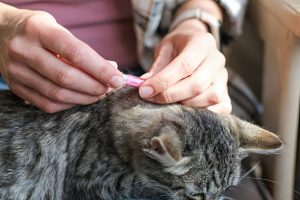
- Flea, tick, heartworm prevention
- Mosquito repellents (pet-safe)
- Deworming schedule
- Fungal infection awareness
- Saltwater skin care
- Keep digital and paper schedule & records
Best practice:
Build a written onboard parasite prevention calendar.
📄 Documentation & International Readiness
Paperwork is easy to overlook — and impossible to fix at sea. Even for local sailing, clear identification and medical records are essential. For international travel, documentation becomes the difference between smooth entry, costly delays, or denied access.
This preparation includes microchip registration, vaccination certificates, rabies records, ownership documentation, medical summaries, and emergency information. It also involves building both digital and waterproof hard-copy systems and knowing how to present records at borders, marinas, and veterinary clinics abroad.
Best practice:
Carry two complete document sets: one waterproof physical copy and one cloud-stored digital archive.
International pet travel is not a single requirement — it is a chain of timed steps that can span months or even years. These may include rabies vaccination, antibody titre blood testing, government waiting periods, import permits, quarantine considerations, and arrival inspections. This section prepares sailors to understand global pet movement systems, research destination regulations, plan routes around compliance windows, and avoid countries that may present unacceptable risks to pets.
It also includes return-home planning, which many sailors overlook until it is too late.
Best practice:
Plan your sailing route around your pet’s legal movement windows — not the other way around.
 5. Microchipping
Permanent Identification Systems
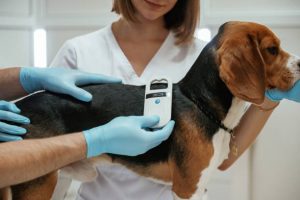
A microchip is the foundation of pet identification when sailing. For international sailing, a compliant microchip is usually legally required before any rabies vaccination or official documentation is issued. Without it, later vaccinations and blood tests will be invalid.
- ISO-compatible microchip (11784/11785 standard)
- International registry registration
- Updated owner contact details
- Proof of implantation certificate
- Photo identification sheet
- Backup physical ID tags
- Emergency contact cards onboard
Best practice:
Your pet should be traceable even if separated from you. There is no universal microchip data base, most are country specific. Register your pet at home but also local database when sailing in foreign countries.
📘 6. Pet Passports & Official Travel Documents
International Identification & Border Compliance
Pet passports and official veterinary travel records consolidate your pet’s identity, vaccination history, and medical status into one recognised document. They are often required for international movement and make border clearance, marina inspections, and veterinary visits significantly easier.
- Pet passport (where issued)
- Official veterinary health book
- Rabies vaccination certificates
- Microchip documentation
- Import/export permits (if applicable)
- Government-endorsed health certificates
- Certified translations (if required)
- Digital and waterproof hard-copy sets

Best practice:
Apply for travel documents early and maintain both physical and digital copies organised in a dedicated pet travel folder.
 7. Country Entry & Port Clearance Planning
Avoid Quarantine, Fines & Refusal
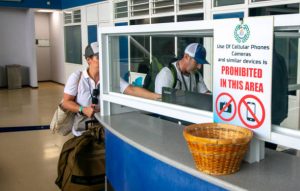
🛂 Country entry rules are one of the biggest challenges of sailing with pets — and one of the most common reasons journeys fail or pets are refused entry.
 A core purpose of this website is to help sailors understand, plan, and navigate international pet entry requirements so they can cruise legally, avoid quarantine risks, and protect their animals.*
Every country controls the movement of animals across its borders. Requirements can include specific vaccination sequences, blood testing, waiting periods, import permits, and arrival inspections. Missing even one step can result in denied entry, costly delays, fines, or forced quaranti
- Country-specific vaccination rules
- Temporary Import permits
- Advance veterinary certificates
- Government authority forms
- Quarantine and restricted breed checks
- Pets allowed onland or restricted to yacht
- Port vet inspections
- Customs and biosecurity checks
- Onboard confinement requirements
Best practice:
Research requirements before choosing your cruising route.
* ⚠️ Disclaimer: Paws on Deck make every effort to have all the latest official information available. However, Governments can change requirements at any time, therefor double check country specific government websites (Link on Country Guide) to verify the latest vaccine and entry requirements. Please help us keeping information current by informing us with the ‘Contact us, Information Update’.
📁 8. Onboard Pet Document System
Emergency-Accessible Records
Salt and sand cause irritation and infections.
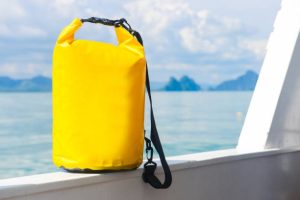
- Waterproof document binder
- Cloud backups
- USB drive copies
- Translation-ready summaries
- Copies in Emergency Grab-bag
- Digital stored copies on Paws on Deck App
Best practice:
Keep documents accessible from the cockpit. And also have relevant documents in the pet emergency grab-bag
🐕 Training & Behaviour Preparation
Sailing changes how pets sleep, eat, exercise, and interact with their environment. Space is smaller, movement is constant, shore access varies, and stimulation must often be created onboard. Pets that thrive aboard are those whose routines are intentionally designed.
This preparation focuses on daily structure, enrichment, exercise planning, climate management, passage preparation, and stress reduction. It also includes multi-pet dynamics and how to support animals through long stays aboard.
It also includes emergency conditioning — teaching pets to tolerate lifting, confinement, protective gear, and unfamiliar handling so they are calmer and safer during real emergencies. And training for real emergencies.
Lifestyle preparation determines whether your pet merely survives on a boat — or truly adapts.
Best practice:
Establish predictable routines early — pets cope better with motion when their days feel familiar. Prepare and do all emergency training e.g. Man (Pet) Overboard
 1. Basic Boat Training
Movement, Sounds & Surfaces
Getting pets comfortable with the physical environment of a boat is the first step to safe, confident sailing.
- Exposure to marinas and pontoons
- Engine noise and vibration training
- Ramp and ladder use
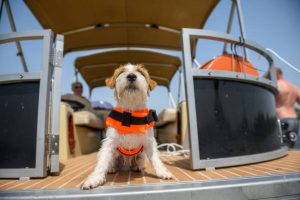
- Wearing harness and lifejacket
- Dinghy familiarisation
Best practice:
Start training in the marina, then progress to calm water, both on anchored and underway before going to the open sea.
 2. Toileting & Routine Conditioning
Predictable Daily Systems
Teaching pets reliable onboard toileting and routines keeps life smooth and prevents accidents. Cats are often easier as they might already be used to litter trays.
- Onboard potty training
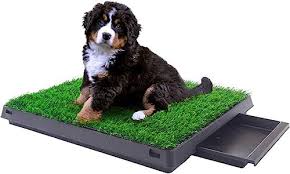
- Artificial grass familiarisation
- Schedule adaptation
- Night-time routines
- Adverse Weather training
- Start Training at home to familiarise your pet
Best practice:
Your pet should toilet reliably without shore access. Start training both dogs or cats at home using litter trays or artificial grass trays
 3. Stress Resilience & Emotional Readiness
Mental Conditioning
Mental preparation ensures pets stay calm and adaptable, even during motion, noise, or handling
- Desensitisation to motion
- Crate and safe-zone training
- Alone-time conditioning
- Handling and restraint tolerance
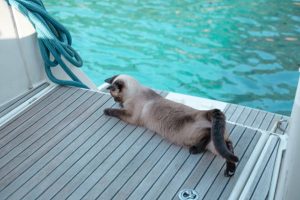
Best practice:
Emotional stability matters as much as physical fitness.
 4. Harness & Tether Training
Controlled Movement & Safety
Harnesses and tethers keep pets safe on deck and support emergency handling.
- Practice wearing marine-grade harnesses
- Train with cockpit tether points
- Familiarise with quick-release clips
- Attach to dinghy tie-in points for transfers
- Emergency lifting practice
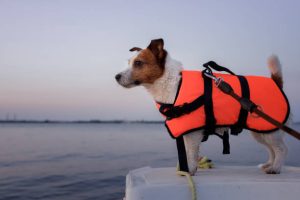
Best practice:
Pets should be comfortable being clipped in and lifted before first offshore trip
 5. Lifestyle & Routine Transition
Daily Structure & Comfort
Sailing changes how pets sleep, eat, exercise, and interact with their environment. Proper routines reduce stress and build confidence.
- Daily structure and enrichment
- Exercise planning and climate management
- Passage preparation and stress reduction
- Multi-pet dynamics and onboard support
- Emergency conditioning — lifting, restraint, and gear exposure
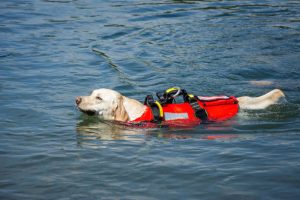
Best practice:
Establish predictable routines early — pets cope better when their days feel familiar. Use current routines that they used to where possible.
6. Dinghy Access
Safe Boarding & Transfers
Training your pet to confidently use the dinghy ensures safe boarding, disembarking, and water transfers. Familiarity reduces stress and prevents accidents when moving between boat and shore.
- Practice stepping on and off the dinghy from dock or swim platform
- Introduce floating ramps or pet-friendly boarding mats
- Train wearing a lifejacket or harness
- Short calm water trips before longer passages
- Positive reinforcement and treats for confident behaviour
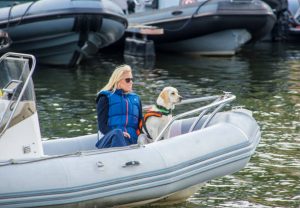
Best practice:
Start with calm, short trips and gradually increase distance and movement until your pet is confident in all boarding scenarios.
🏡 7. Leaving Your Pet Onboard Alone
Alone-Time Conditioning
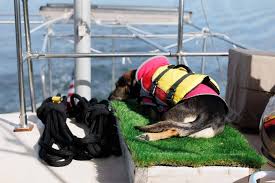
Pets need to be comfortable staying alone onboard while you handle sails, run errands ashore, or manage emergencies. Proper training reduces anxiety and prevents destructive behaviour. You need to ensure pets are safe, confined to areas so they cant fall or jump overboard. Proper training, planning and yacht setup is crucial for your pets safety, to prevent real life emergencies and risk of ging overboard and drowning.
- Short departures initially, gradually increasing duration
- Provide safe zones, crates, or harnessed areas
- Be aware of danger of overheating, interior of yachts are the same as locked cars
- Leave familiar bedding, toys, and water
- Background noise or engine hum to simulate sailing conditions
- Reward calm behaviour upon return
Best practice:
Practice alone-time daily, slowly extending duration, so your pet is relaxed during real sailing or dockside absences.
 Pet Gear & Your Pet's Personal Equipment
Every sailing pet should have a personal equipment system just like every crew member. This includes safety gear, comfort items, environmental protection, feeding systems, and enrichment tools that support both physical and emotional wellbeing.
This section covers marine lifejackets, harnesses, tethering systems, sun and cold protection, beds and mats, feeding stations, carriers, toys, and identification. It also introduces how to select equipment designed for wet, moving, and corrosive environments.
Good equipment reduces risk, improves comfort, and allows safer handling in rough conditions.
Best practice:
Test all gear on short trips before relying on it offshore or internationally.
🛡 1. Protective Covers for Inflatable Dinghies
Prevent Punctures & Heat Damage
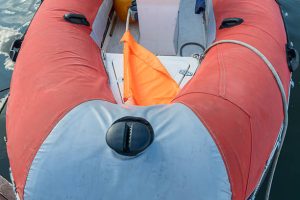
Inflatable tubes and floors are vulnerable to claws, gear, and UV. Protective covers extend the life of the tender and make surfaces safer for pets’ paws
- Dinghy chaps or tube covers
- Reinforced boarding zones
- UV-resistant materials
- Non-slip surfaces
Best practice:
Prioritise protecting boarding contact zones (tube tops, bow area, boarding sides) to reduce wear and punctures.
2. Non-Slip Flooring & Traction Aids
Traction in Motion and Wet Conditions
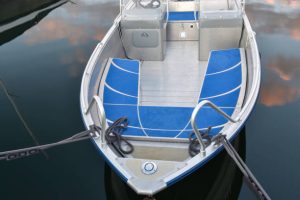
Tender floors can be slippery and stressful for pets, especially when wet or heeling in waves.
- EVA foam deck mats
- Marine-grade non-skip tiles
- Grip strips near boarding and ladder areas
- Textured boarding ramps
Best practice:
Extend non-slip surfaces at least one stride length into the tender so pets don’t lose grip after boarding.
🪜 3. Tender Boarding & Water Access Systems
Make Entry and Exit Simple
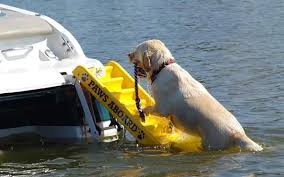
Moving between yacht, dinghy, and water is one of the biggest risk points for pets. Proper systems remove fear and repeat strain
- Floating dog or pet ramps
- Portable pet boarding ramps for docks
- Non-slip ladders or boarding steps
- Clear, consistent boarding side on all transfers
Best practice:
Always train pets to use the designated boarding route before long passages.
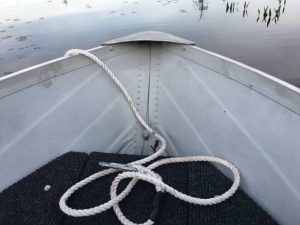
🦮 4. Harness & Tether Points in Tender
Safe Restraints Without Tipping
Dinghies are narrow and responsive. Dogs or cats moving freely can shift balance and create a fall risk.
- Fixed low-mounted eyelets or D-rings
- Short, elasticated pet tethers
- Quick-release marine clips
- Tender seating or floor tie points
Best practice:
Place tethers so pets stay near centreline, not at the edges, to reduce tipping risk
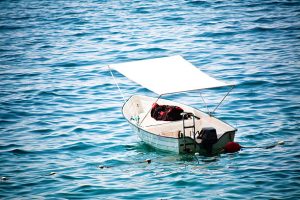
☀️ 5. Shade, Shelter & Comfort in Tender
Heat & Weather Protection
Tenders offer little protection from sun, spray, or weather. Portable coverage increases comfort and reduces stress.
- Removable Bimini or canopy
- UV-resistant shade cloth
- Cooling mats or soft bedding
- Water stations securely placed
Best practice:
Provide shade before boarding so pets know where the cool / dry zone is.
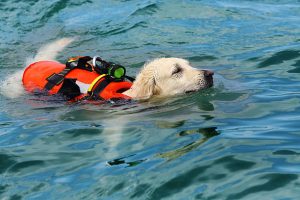
🛟 6. Lifejackets & Rescue Systems
Floatation & Recovery Gear
Even on short tender rides, unexpected swells or slips can happen. Lifejackets improve buoyancy and retrieval.
- Pet lifejackets with lifting handles
- High-visibility colours for identification
- Adjustable harness fit for water rescue
- Floating throw line clipped onboard
Best practice:
Practice pet boarding from deeper water (simulating overboard retrieval) before offshore use.
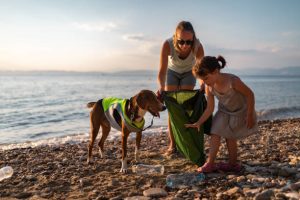
🚽 7. Hygiene & Quick Rinse Setup
Clean, Controlled Shore & Tender Zones
Sand, salt, and potty breaks happen during tender trips. Quick cleanup prevents irritation and mess.
- Small artificial turf potty mats
- Rinse spray bottle or deck hose connection
- Waste bags and sealable containers
- Quick-dry towels or chamois
Best practice:
Practice pet boarding from Store hygiene supplies in a dry, easily reachable pouch near the boarding area.
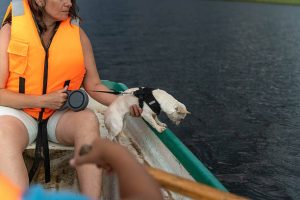
8. Young Pets, Cat, And Small Dog Handling in Tender
Species-Specific Comfort & Security
Cats, smaller dogs, and younger pets may be less confident in unstable tenders
- Secure carriers clipped to seating
- Cat harness/leash training before boarding
- Soft bedding inside carriers
- Calm familiar toys or comfort cloths
Best practice:
For cats, use carriers as default tender containment rather than free roaming.
🧰 Emergency & Contingency Preparation
Every sailing pet should have a personal equipment system just like every crew member. This includes safety gear, comfort items, environmental protection, feeding systems, and enrichment tools that support both physical and emotional wellbeing.
This section covers marine lifejackets, harnesses, tethering systems, sun and cold protection, beds and mats, feeding stations, carriers, toys, and identification. It also introduces how to select equipment designed for wet, moving, and corrosive environments.
Good equipment reduces risk, improves comfort, and allows safer handling in rough conditions.
Best practice:
Test all gear on short trips before relying on it offshore or internationally.
🛡 1. Protective Covers for Inflatable Dinghies
Prevent Punctures & Heat Damage
Inflatable tubes and floors are vulnerable to claws, gear, and UV. Protective covers extend the life of the tender and make surfaces safer for pets’ paws
- Dinghy chaps or tube covers
- Reinforced boarding zones
- UV-resistant materials
- Non-slip surfaces
Best practice:
Prioritise protecting boarding contact zones (tube tops, bow area, boarding sides) to reduce wear and punctures.
2. Non-Slip Flooring & Traction Aids
Traction in Motion and Wet Conditions
Tender floors can be slippery and stressful for pets, especially when wet or heeling in waves.
- EVA foam deck mats
- Marine-grade non-skip tiles
- Grip strips near boarding and ladder areas
- Textured boarding ramps
Best practice:
Extend non-slip surfaces at least one stride length into the tender so pets don’t lose grip after boarding.
🪜 3. Tender Boarding & Water Access Systems
Make Entry and Exit Simple
Moving between yacht, dinghy, and water is one of the biggest risk points for pets. Proper systems remove fear and repeat strain
- Floating dog or pet ramps
- Portable pet boarding ramps for docks
- Non-slip ladders or boarding steps
- Clear, consistent boarding side on all transfers
Best practice:
Always train pets to use the designated boarding route before long passages.
🦮 4. Harness & Tether Points in Tender
Safe Restraints Without Tipping
Dinghies are narrow and responsive. Dogs or cats moving freely can shift balance and create a fall risk.
- Fixed low-mounted eyelets or D-rings
- Short, elasticated pet tethers
- Quick-release marine clips
- Tender seating or floor tie points
Best practice:
Place tethers so pets stay near centreline, not at the edges, to reduce tipping risk
☀️ 5. Shade, Shelter & Comfort in Tender
Heat & Weather Protection
Tenders offer little protection from sun, spray, or weather. Portable coverage increases comfort and reduces stress.
- Removable Bimini or canopy
- UV-resistant shade cloth
- Cooling mats or soft bedding
- Water stations securely placed
Best practice:
Provide shade before boarding so pets know where the cool / dry zone is.
🛟 6. Lifejackets & Rescue Systems
Floatation & Recovery Gear
Even on short tender rides, unexpected swells or slips can happen. Lifejackets improve buoyancy and retrieval.
- Pet lifejackets with lifting handles
- High-visibility colours for identification
- Adjustable harness fit for water rescue
- Floating throw line clipped onboard
Best practice:
Practice pet boarding from deeper water (simulating overboard retrieval) before offshore use.
🚽 7. Hygiene & Quick Rinse Setup
Clean, Controlled Shore & Tender Zones
Sand, salt, and potty breaks happen during tender trips. Quick cleanup prevents irritation and mess.
- Small artificial turf potty mats
- Rinse spray bottle or deck hose connection
- Waste bags and sealable containers
- Quick-dry towels or chamois
Best practice:
Practice pet boarding from Store hygiene supplies in a dry, easily reachable pouch near the boarding area.
8. Young Pets, Cat, And Small Dog Handling in Tender
Species-Specific Comfort & Security
Cats, smaller dogs, and younger pets may be less confident in unstable tenders
- Secure carriers clipped to seating
- Cat harness/leash training before boarding
- Soft bedding inside carriers
- Calm familiar toys or comfort cloths
Best practice:
For cats, use carriers as default tender containment rather than free roaming.
🌍 Internationql Sailing Preparation
Every sailing pet should have a personal equipment system just like every crew member. This includes safety gear, comfort items, environmental protection, feeding systems, and enrichment tools that support both physical and emotional wellbeing.
This section covers marine lifejackets, harnesses, tethering systems, sun and cold protection, beds and mats, feeding stations, carriers, toys, and identification. It also introduces how to select equipment designed for wet, moving, and corrosive environments.
Good equipment reduces risk, improves comfort, and allows safer handling in rough conditions.
Best practice:
Test all gear on short trips before relying on it offshore or internationally.
🛡 1. Protective Covers for Inflatable Dinghies
Prevent Punctures & Heat Damage
Inflatable tubes and floors are vulnerable to claws, gear, and UV. Protective covers extend the life of the tender and make surfaces safer for pets’ paws
- Dinghy chaps or tube covers
- Reinforced boarding zones
- UV-resistant materials
- Non-slip surfaces
Best practice:
Prioritise protecting boarding contact zones (tube tops, bow area, boarding sides) to reduce wear and punctures.
2. Non-Slip Flooring & Traction Aids
Traction in Motion and Wet Conditions
Tender floors can be slippery and stressful for pets, especially when wet or heeling in waves.
- EVA foam deck mats
- Marine-grade non-skip tiles
- Grip strips near boarding and ladder areas
- Textured boarding ramps
Best practice:
Extend non-slip surfaces at least one stride length into the tender so pets don’t lose grip after boarding.
🪜 3. Tender Boarding & Water Access Systems
Make Entry and Exit Simple
Moving between yacht, dinghy, and water is one of the biggest risk points for pets. Proper systems remove fear and repeat strain
- Floating dog or pet ramps
- Portable pet boarding ramps for docks
- Non-slip ladders or boarding steps
- Clear, consistent boarding side on all transfers
Best practice:
Always train pets to use the designated boarding route before long passages.
🦮 4. Harness & Tether Points in Tender
Safe Restraints Without Tipping
Dinghies are narrow and responsive. Dogs or cats moving freely can shift balance and create a fall risk.
- Fixed low-mounted eyelets or D-rings
- Short, elasticated pet tethers
- Quick-release marine clips
- Tender seating or floor tie points
Best practice:
Place tethers so pets stay near centreline, not at the edges, to reduce tipping risk
☀️ 5. Shade, Shelter & Comfort in Tender
Heat & Weather Protection
Tenders offer little protection from sun, spray, or weather. Portable coverage increases comfort and reduces stress.
- Removable Bimini or canopy
- UV-resistant shade cloth
- Cooling mats or soft bedding
- Water stations securely placed
Best practice:
Provide shade before boarding so pets know where the cool / dry zone is.
🛟 6. Lifejackets & Rescue Systems
Floatation & Recovery Gear
Even on short tender rides, unexpected swells or slips can happen. Lifejackets improve buoyancy and retrieval.
- Pet lifejackets with lifting handles
- High-visibility colours for identification
- Adjustable harness fit for water rescue
- Floating throw line clipped onboard
Best practice:
Practice pet boarding from deeper water (simulating overboard retrieval) before offshore use.
🚽 7. Hygiene & Quick Rinse Setup
Clean, Controlled Shore & Tender Zones
Sand, salt, and potty breaks happen during tender trips. Quick cleanup prevents irritation and mess.
- Small artificial turf potty mats
- Rinse spray bottle or deck hose connection
- Waste bags and sealable containers
- Quick-dry towels or chamois
Best practice:
Practice pet boarding from Store hygiene supplies in a dry, easily reachable pouch near the boarding area.
8. Young Pets, Cat, And Small Dog Handling in Tender
Species-Specific Comfort & Security
Cats, smaller dogs, and younger pets may be less confident in unstable tenders
- Secure carriers clipped to seating
- Cat harness/leash training before boarding
- Soft bedding inside carriers
- Calm familiar toys or comfort cloths
Best practice:
For cats, use carriers as default tender containment rather than free roaming.
Setting Your Yacht up for Pets - Sample Training Drills
Cats need secure zones, climbing options, and litter solutions to feel comfortable at sea. Discover ways to keep your feline friends happy and safe while cruising. This could be applicable to some dogs
🐬 Introduction
Gradual Introduction
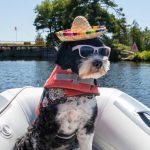
- Introduce pets gradually to the boat — short visits before longer trips helps acclimate them to motion, noise, and smells.
Training & Procedure Adjustments
Swimming & Rescue Drills
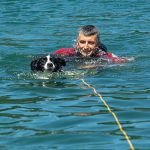
- Practice retrieval and swim-to-boat procedures in calm conditions before offshore passages
Deck Safety Rules
- Train pets to obey deck rules and wait for commands — reduces risk of overboard incidents.
Obedience &
Deck Safety
Basic Obedience & Recall
- Ensure pets understand commands like stay, come, and leave it to reduce risk on decks
Secure Pets in Rough Conditions
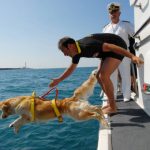
- Use harness tethers or confine pets below deck in severe seas to avoid injury.
⚠️ Disclaimer & Feedback
The information on this site is provided for general guidance only and does not replace government, professional veterinary, marine safety, or legal advice. Sailing conditions, boats, regulations, and animals vary widely. Always assess risks and consult qualified professionals where appropriate.
We always welcome & encourage community and fellow sailors feedback and suggestions to improve and expand these resources.
